Categories
photography Social history

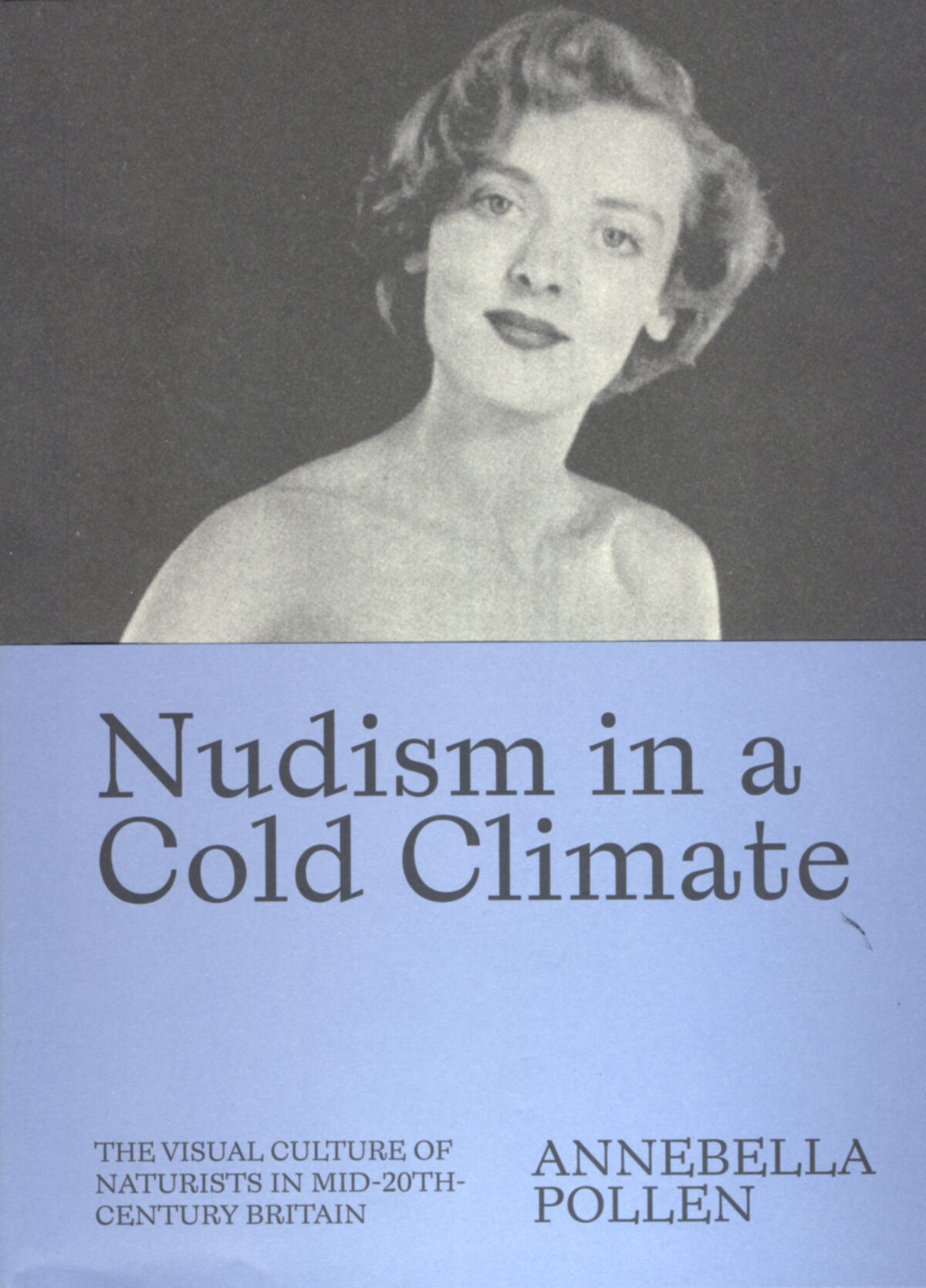
Book Review: Nudism in a Cold Climate by AnneBella Pollen

The Visual Culture of Naturists in mid-20th century Britain

Researching and collecting old photographs takes you to some strange and unexpected places. In this case I was interested in the photographs by Bertram Parks and Yvonne Cooper in annual volumes of “Photograms of the Year”. I knew that they were well-known photographers who managed to span taking society photographs and nudes (though not at the same time!) without causing any apparent controversies. It was also easy to discover that not only were they published in “respectable” books and magazines but they also contributed to many nudist magazines such as Health and Efficiency. When I read that they were supporters of British Nudism it seemed inevitable that I would get a copy of AnneBella Pollen’s book on the subject.

It is indeed the case that Bertram Parks and Yvonne Cooper not only took photographs of Naturists but they actively promoted the practice through their work. But it was also the case that they most often used professional models rather than real naturists and it was these photographs that were most often used in nudist publications. This is at the heart of many of the questions that can be raised about the nudist movement in mid-20th century Britain. The naturists themselves were trying to promote a healthy lifestyle suitable for families and claiming that going without clothes was a way of entirely obviating sexual connotations and indeed that participants would not fall prey to pornographic thoughts as regular exposure to naked bodies would make nudity entirely natural. Of course there is a massive contradiction here as “Health and Efficiency”, “The Naturist” etc., purported to support these core ideas and yet their pages were full of naked female models. The number of naturists was much, much lower than the circulation of these magazines so how were the magazines really being seen? The magazines were also full of adverts for not only healthy lifestyle products but also doubtful self-improvement courses and books. Want a bigger bust (and this was long before Polanski) or want to grow muscles to stop bullies kicking sand in your face? Then there was something there for you. As the magazines grew they also began to advertise services, books and films clearly meant to titillate.

Annebella Pollen lays out these developments with admiral clarity and with copious photographs which strike one as charming and old-fashioned rather than pornographic. She traces the evolution of nudism as a philosophy through gymnosophy through nudism and naturism between the 1920s and the early 1970s. The terms used seem to mean the same thing but there are subtle differences and changing definitions to be explored along the way. You can see Pollen’s academic background in her writing yet she always manages to keep her narrative interesting and readable with only the odd reference to “othering” and gender identities.

Nudism in a Cold Climate is one of those books that has quotable entries on every page and I could easily fill this review with them. Take her opening paragraph for instance: “There’s an old joke about pornographic magazines; I only read them for the articles! It regularly popped into my mind while researching 50 years of nudist publications packed full of photographs of naked people. In my case the defence was true: nudist articles have complex and interesting things to say about the movement’s principles and its public identity. Nudist authors were earnest in the face of ridicule. They are worth taking seriously for what they reveal about bodily ideals and realities in a period of rapid social and cultural change in 20th century Britain.”

Despite what you might expect this book has a lengthy and interesting text as well as the interspersed images. Even if you come to be titillated you will learn much about social attitudes and social history. It’s worth saying too that the book has excellent notes, a comprehensive index and properly referenced image credits, all things that matter not only to scholars but to people like me wanting to clarify the history of photography and identify new sources of information. Of course there’s a lot that could be said about modern day pornography, the internet and so on but they are not the focus of this book which generally ends discussion in the early 1970s. From my perspective it is not only a riveting read but it also sheds light on vintage photography in general and shows how trying to separate “art” photography

Categories
photography Social history

Photograms of the Year 1936 – How to Judge the Standard?

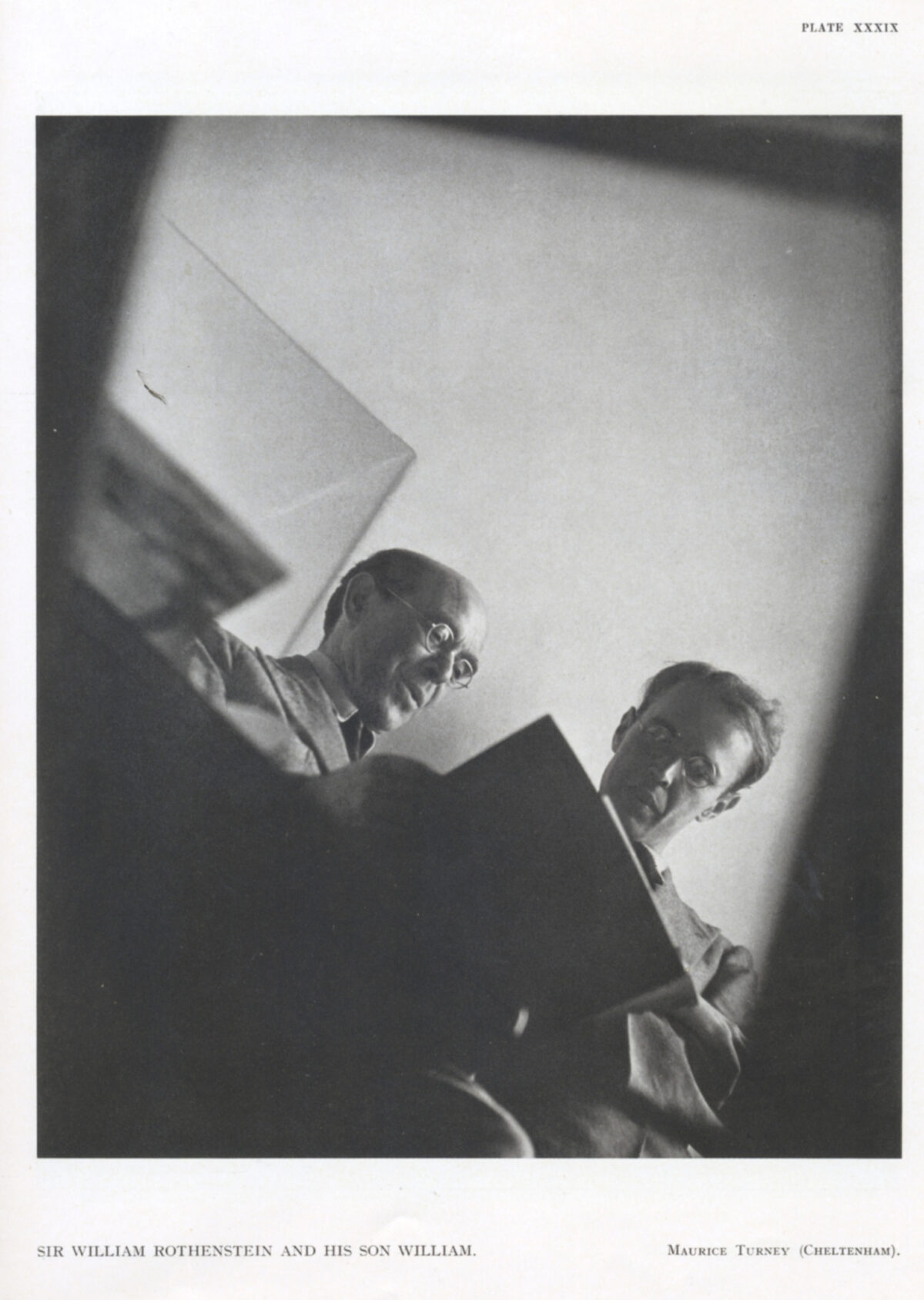
It’s always tempting to judge these old photographs by modern standards. Take this photo of William Rothenstein and son. By modern standards I would judge this to be a very successful portrait and the low angle and framing adds to the effect. However, the 1936 annual opines that it “goes considerably farther from the accepted standard, for not only are the figures seen from a viewpoint appreciably lower than usual, but they are also shown at an angle that is a departure from the normal vertical. Whether the end has justified the means or not must be left to the reader to determine.”

In contrast this pair of photographs seem quite pedestrian by modern standards and I feel sure they would receive low marks if seen in a modern camera club competition. (Not that would necessarily be a gold standard by which to judge photographs).

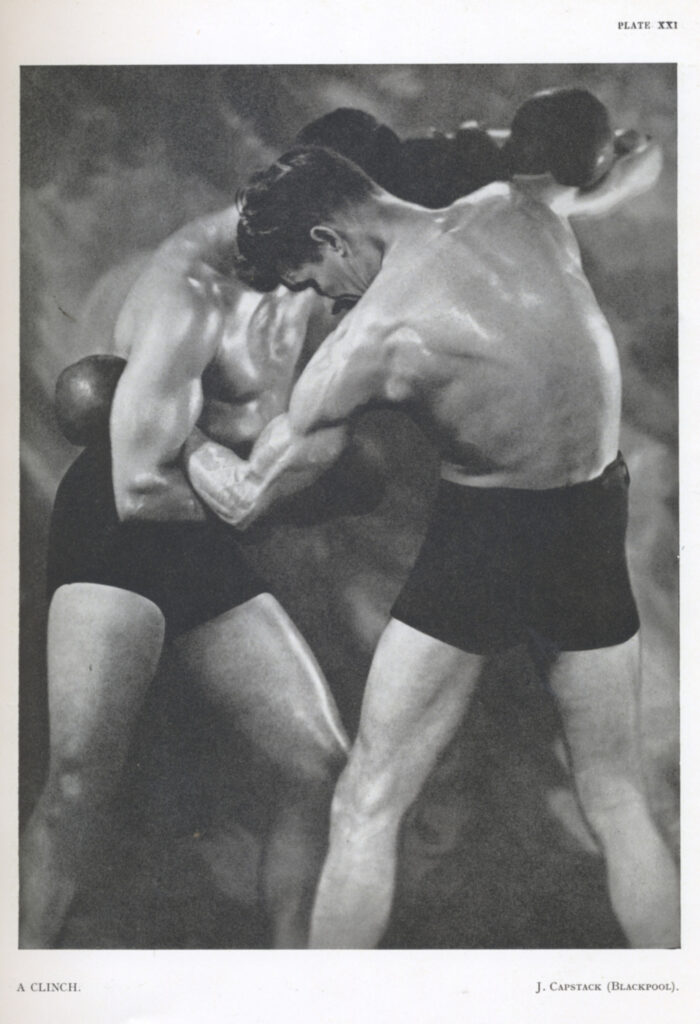
The photograph of this pair of boxers appears more modern in tone though obviously posed. Today you’d expect to see an action photograph of a real bout.

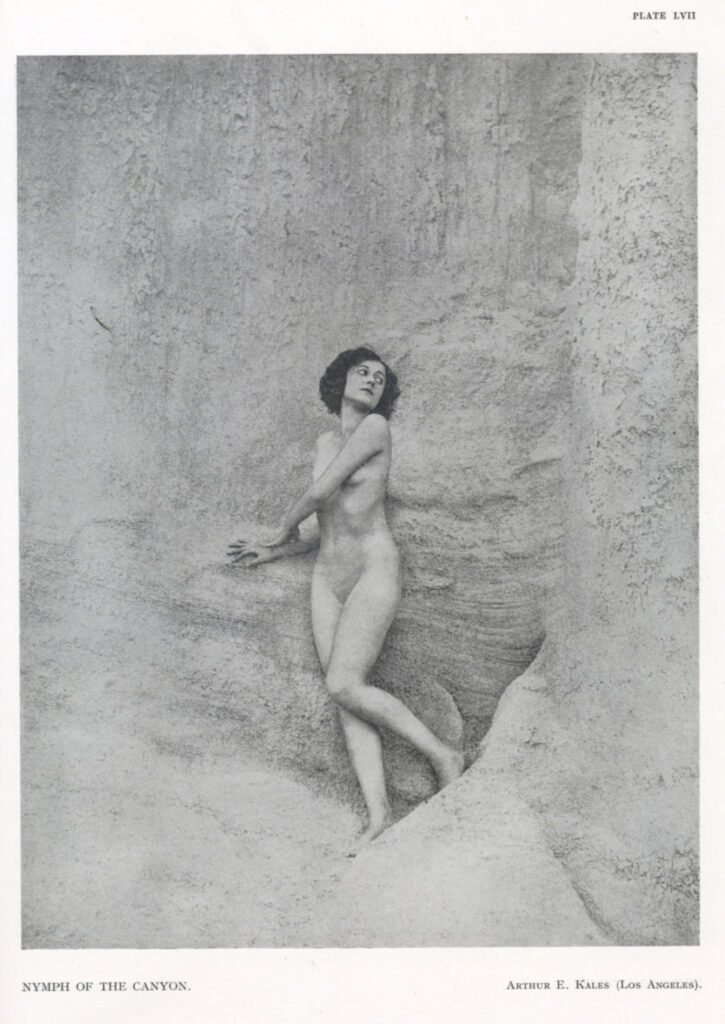
Arthur Kales was a relatively well known photographer and this nude would, I suggest, be very acceptable in a modern context.

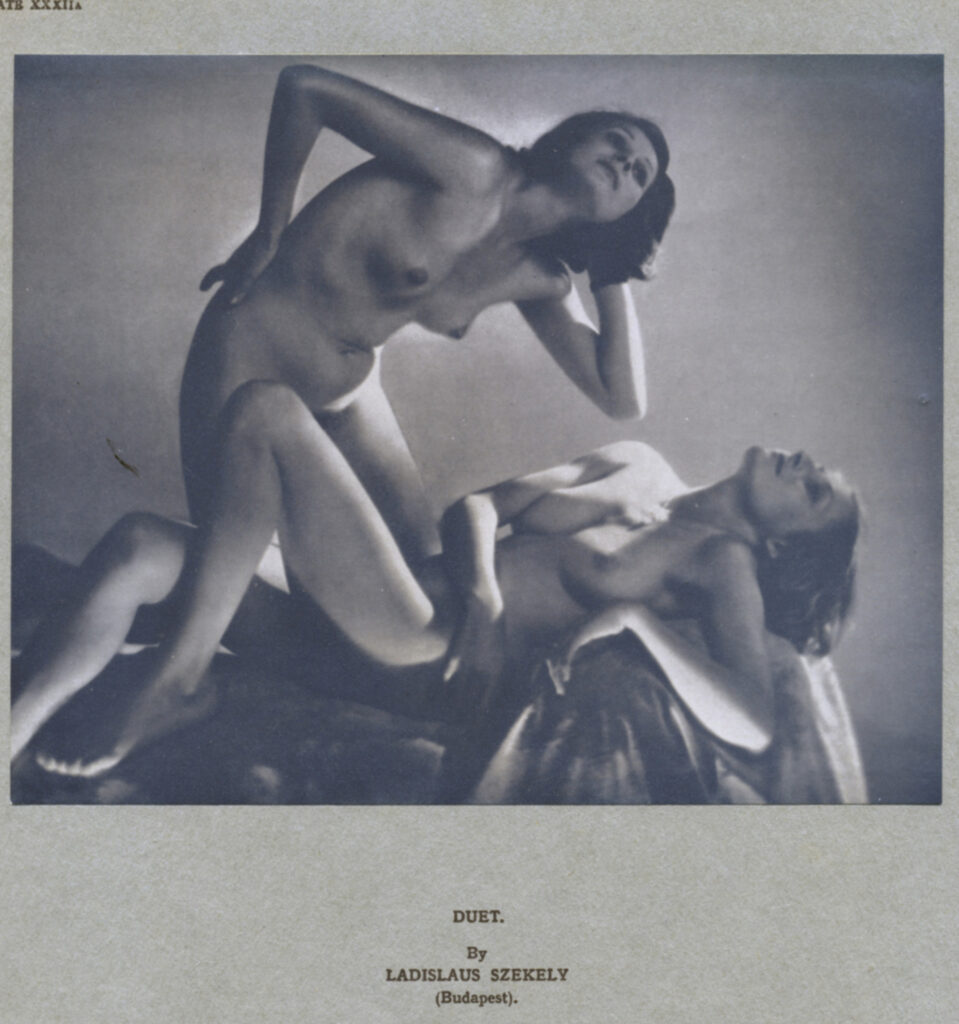
“Duet” owes rather more to Victorian ideas of classicism and I doubt it would be acceptable in mainstream photography today but I could well be wrong as the line between art nude and soft porn is hard to define.

As usual I have just picked out a few favourites to fit my narrative but the 1936 edition of Photograms of the Year had its full complement of still lives, portraits, landscapes, abstract compositions and often sickly cute shots of children and animals. For some reason there was a larger than usual representation of nudes this time around and I’ve only picked out a couple to discuss here.

As with literature it is a foolish endeavour to judge by modern standards but nevertheless it is interesting to see how standards have changed.

Categories
photography Social history war

Photograms of the Year 1946 and a Stalingrad Mystery

This stylish Art Deco inspired photograph has strong visual appeal.

War is over but is this reflected in Photograms of the Year for 1946? Given the introduction to this volume you would think so:

Despite this stirring introduction I can find very little photographically that reflects the war nor its cessation.

Intriguingly this photograph is difficult to interpret and there is no explanation although other entries have descriptions to help contextualise them. In 1941 there was still a non-aggression pact between Germany and Russia. The outbreak of hostilities between the two countries and the siege of Leningrad began in 1942. So was this photograph an ironic comment on the calm before the storm or just a portrait taken in Leningrad in 1941? Given that the photographer operated out of Bridlington after the war and was known for taking snaps of holidaymakers I suspect the latter to be true.

The Way of An Eagle is another stylish photograph portrayed in an impressionistic manner.

Artistry or cheesecake disguised as art?

Classical allusions are often invoked in nude studies as seen here. Note that it’s a female photographer once again.

To my eye there is little in 1946’s Photograms to distinguish it from previous years. Elsewhere we have the usual pictorialist landscapes, odd still-lifes and closeups of faces with little acknowledgement of the war, certainly in visual terms, and no hint of the documentary traditions of such importance taking place away from the rarefied world of art photography.

Categories
photography Social history

Photograms of the Year 1929 – the Interwar Years

What’s going on in the World in 1929? Interesting though Photograms of the Year is, you won’t find many answers therein. Each year a paragraph or two is devoted to photography in various countries. In Germany it was now the time of the Weimar Republic, a term coined by Hitler, characterised by hyperinflation, competing paramilitaries and general unrest. None of this is mentioned in the short essay on Germany which, instead, presents a word salad of little meaning such as “no longer the photography we have been calling artistic until a couple of years ago; not the photography based on the traditional principles of pictorial effect.”

“The Secret” shown above could be straight out of Teutonic mythology but is by a Manchester photographer. In some ways this reminds me of the paintings of Evelyn De Morgan as well as referencing back to the Pre-Raphaelites.

“Portrait”, at least gives a contemporary view of a flapper with its Art Deco overtones.

Wildlife photography is not well represented and I can’t help wondering whether this is a live stoat caught in action or a stuffed specimen posed for effect.

“The Terror of the Desert” is one of my favourites from this collection with it’s almost surreal depiction of desert and cloudscape.

In Pseud’s corner we are offered “A Thrush Sings” and “All Nature is But Art.” There are others but these two will suffice.

It’s quite kitsch but I find “Three Ducks” rather charming.

I’ll finish with this photograph of “Ulla Poulson,” a kind of portraiture that Photograms of the Year does so well.

Categories
photography Social history war

Photograms of the Year 1942 – Virtue Signalling the War

Of course virtue signalling was not a concept around in 1942 but you can see how it can be retrofitted. The 1942 album contains sage words about the war and features some photographs of military men and this warship. When I say military men I don’t mean actual soldiers, airmen and sailors but top brass in their dress uniforms photographed in a studio. The introduction to the album does admit that photography was of “outstanding importance for aerial reconnaissance” and “of inestimable value in modern warfare.”

And now for some of the usual landscapes, nudes etc.

Here’s a relaxing and heart-warming photo of a woman, her child and dog pointedly labelled “freedom.” You probably feel better already.

Again untaxing but this romantic shot of a women gazing out to sea is wonderfully composed.

“The Theatre Sister” is more challenging and looks rather modern in comparison to some other photographs. This wouldn’t be out of place in a modern publication.

Euclid’s Girl Friend and Hogarth’s Curve prove that geometry can be more fun than you might have thought.

Sutherlandshire does not exist as such today but is part of the Highland region of Scotland since 1975.

If I am sometimes cynical about the photographs in this annual publication it is because I am also very fond of the contents and what it tells us about the social history of photography in the twentieth century. I also have to ask myself what these reviews say about me as I select a handful of shots from each year, surely revealing my own subjective likes and dislikes. (Answers on a postcard please).

Categories
Dance Music Hall photography Social history

Vintage Dancing Girls of Preston

A series of four photographs all from the studio of Arthur Winter of Preston. This one has a date of 1935 on the reverse and handwritten “The Maid of the Mountains.” It turns out that “The Maid of the Mountains” was a successful light operetta performed often in the first half of the twentieth century by various different companies and troupes. A search of the British Newspaper Archive reveals the following advertisement:

So, although I can’t be certain, it seems likely from the date that the photograph is of the chorus from the Preston and District Amateur Operatic Society.

Three further photographs from the same studio and date are probably of dancers from the same Society.

Not sure how I feel about “AI” generated videos from old photographs but the results are always interesting. The software seems to have invented some extra dancing girls for “The Maid of the Mountains.”

A second video generation seems altogether unlikely and too modern in style.

Categories
photography Social history war

Photograms of the Year 1941: but Don’t Mention the War

It’s the middle of the war and this photograph is the only one in “Photograms of the Year 1941” related to wartime. Everywhere else it’s business as usual. An introduction was added after the volume was assembled and includes the following: “The fact that it includes practically no photographs of warlike subjects is an indication of the place that real picture-making holds in the hearts of the people who practice it. Camera records of various phases of the war at home and abroad may be left to the Press photographers whose business it is, through the illustrated papers and the newsreels, to show the world realistic details of what is being done to the world under arms.”

I take this to mean that only the kind of photos included in the volume are to be considered “real picture-making” whereas war photography is not. This seems not only wrong to me but ignores the artistry of war photographers and the documentary tradition. A corrective for today might be to look up World War II photographers using wikipedia though I note the omission of Lee Miller from both World War II photographers and holocaust photographers. (Her individual entry gets it right though).

Landscape in pictorialist style is well represented as usual as are still lifes:

There are the usual nudes and figure studies. For instance this example of using a classical reference to present a nude:

Personally I find “Idol” to be a much more appealing image and I note that, once again, the female nude is just as likely to be taken by a female photographer as a male one at this time.

“Cherry Time” is another example of the use of classical reference and a pictorialist style.

You won’t be able read the above but it is an example of 21 pages listing camera clubs in the UK which perhaps gives an indication of how popular photography was as a hobby, even in the midst of war. I note that the camera club to which I belong today was listed as being operational in 1941.

Categories
photography Social history

Photograms of the Year 1952: The Wonderful and Weird

The 1952 edition of Photograms of the Year contained the usual, sometimes odd, mixture of themes and styles. Pets continued to be popular subjects proving that cats and dogs ruled long before the advent of the internet. We forget that at this time getting a photograph published was only for the professional photographer or gifted amateur whereas today anyone can post on facebook, instagram and many other platforms no matter how good or bad their work is.

The photo of the black cat is entitled “Actor?” and is by Felipe Maiaru.

As usual, pictorialism is well represented as seen in Copmere by John D Jones and Dawn Departure by H S Newcombe.

I’m always complaining about weird photos of children and old men or ethnic types with lots of wrinkles in these older publications so it’s only right I’ve included examples to show what I mean. Ethnic wrinklies are still popular today whereas it’s difficult to imagine anyone publishing photos of crying infants. (I think I can say wrinklies because I am one myself.) You’re seeing Breaking Point by Ann-Marie Gripman and The Painter by Holt Madson.

Fireside Beauty by Karel Jan Hora is more aesthetically pleasing perhaps. And if you’re here for the nudes:

You’re looking at Juno by Joan Craven and Low Key by W.A.J. Paul. The notes that go with Juno say “Nude photography is one of the most difficult branches of photography with many pitfalls, but when it is successful it is usually more than justified. It must be idealised in some way or it merely becomes portraiture without clothes, which would not be regarded, to say the least, as in good taste.”

Finally you could expect to find several pages of advertisements at the end of each edition of Photograms of the Year. Often the adverts were surprisingly wordy though this one let a striking image do the talking.

Categories
photography Social history

Photograms of the Year 1955: Minimalism, Pictorialism, Beauty, Art Nude or Cheesecake?

The first plate in the 1955 edition of Photograms of the Year is this photo of Suse Pressier by S Enkelman, Elsewhere the usual collection of close ups of faces in grotesque detail are still popular as are studies of young children we might consider ill-advised today though clearly popular not just in this annual publication but in all manner of photographic magazines and books of the time.

The Regents Canal by Alvin L Coburn is clearly inspired by pictorialism and could easily be mistaken for something produced in the early twentieth century.

Minimalism is also represented, for instance in Mist Morning by Chi-Wei Chang.

Of course female beauty is well represented and these portraits of Audrey Hepburn by Cecil Beaton and Serena by Thomas Petroff are portraits of the type we still see today.

When it comes to nudes, and what we would probably classify as “art nudes” these days, we see the influence of classical painting in Nymph by Walter Bird and Grecian Nocturne by Harold Kells. Nymph could easily pass as a study for a Russell Flint watercolour. Flint, who died in 1969, was himself influenced by classical paintings. Grecian Nocturne on the other hand might be seen as influenced by the paintings of Lawrence Alma-Tadema.

And finally we might want to reflect on when art nude becomes merely cheesecake. This Nude Study by W Mortensen seems to me to be more cheesecake than art, not that there’s necessarily anything wrong with that but that depends where you stand as regards the “Male Gaze.”

Categories
Colors Dance Music Hall Social history Victorian

Who has not heard of John Tiller of Manchester?

I recently obtained a 2 page article from The Sketch magazine dated September 18 1895 interviewing John Tiller and giving lots of details about his training methods and troupes. I’m constantly amazed by how many dance troupes he trained and named. As time went on he basically franchised his brand to other trainers so we may never have a full list of the troupes trained in the Tiller method.

Quotes from the article are all shown in italics. The images are also from the article.

Who has not heard of John Tiller of Manchester? But some of us may not have chatted with the energetic and genial manager whose name is so intimately connected with the troups of dancing and singing girls who in fours, sixes, eights, and sixteens, raise out spirits as high as they kick their heels in the maddening whirl of skirt which adds to the abandon of their style.

To go to Manchester without calling on Mr Tiller would be like going to Westbourne Grove without paying Whiteley’s a visit – they both have something to do in the way of skirt-providing, by the way.

I didn’t get the reference to Whiteley’s but wikipedia tells me it was an early department store that grew out of a dressmaker’s business. Hence the reference to “skirt-providing.”

As long as our girls are respectable and respectably conducted we don’t lay too great stress on drawing from any special class. We don’t send them out before eleven. You say that’s full early; but remember that we have them educated under proper governesses, for we hold that cultivation of intellect is necessary to learning dancing.”

It’s surprising how young some of the Tiller Girls were and there are many questions to be asked about their welfare and treatment. On the other hand becoming a Tiller Girl was one of the few ways that working class girls could escape from their backgrounds. Although I don’t think she was ever a Tiller Girl, Jessie Matthew’s career, as given in her autobiography, was very much one of a working class girl finding escape through dance.

“Of course, you supply individual dancers?”

“Rather,” he replied with a confident smile. “Miss Ethel Neild, now at the London Lyric,  comes from our school; Miss Any Knott will be principal boy at Huddersfield next winter; and Miss Bessie Cohen and Miss Maggie Rimmer are well-known soubrettes and dancers of pas-seula all over the provinces; while, if you have space, you might mention “Little Blake,” “Little Annie” and “Little Burnett,” who have been particularly successful in their “single turns.

“I notice that you name your troupes differently. There are “The Fairy Four,” “Tiller’s Troubadours,” “The Forget-Me-Nots,” “Tiller’s Mascottes, “ “The Rainbow Troupe,” &c. What distinction is there between them?”

“Very little, except that each troupe has its own speciality. “The Tiller Troupe” is composed of our tallest girls, and “The Forget-Me-Nots” are the smallest; but they all dance and sing. They can do “cart-wheels,” the “splits,” and the high kick – indeed, everything that is done in fantastic dancing.”

The Sketch article is a great resource and all the more valuable for being contemporaneous with Tiller’s early work. By listing some of his dancers and the venues they appeared at, the article also adds to our knowledge of the music hall venues of the day. Who knows what else is yet to be discovered?