Categories
photography Social history war

Photograms of the Year 1946 and a Stalingrad Mystery

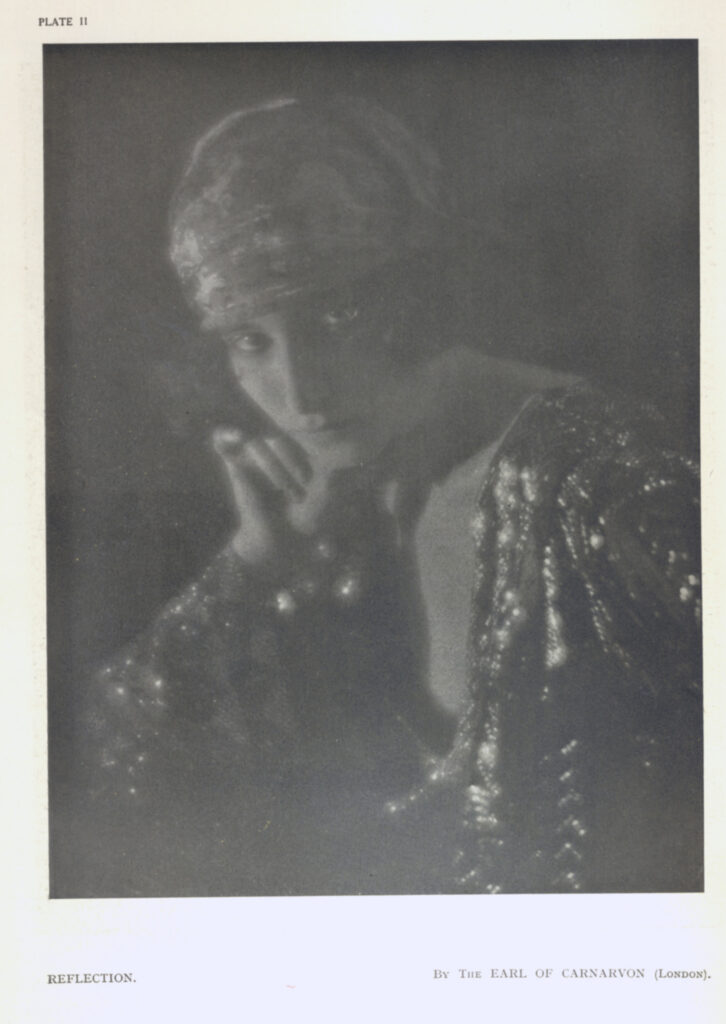
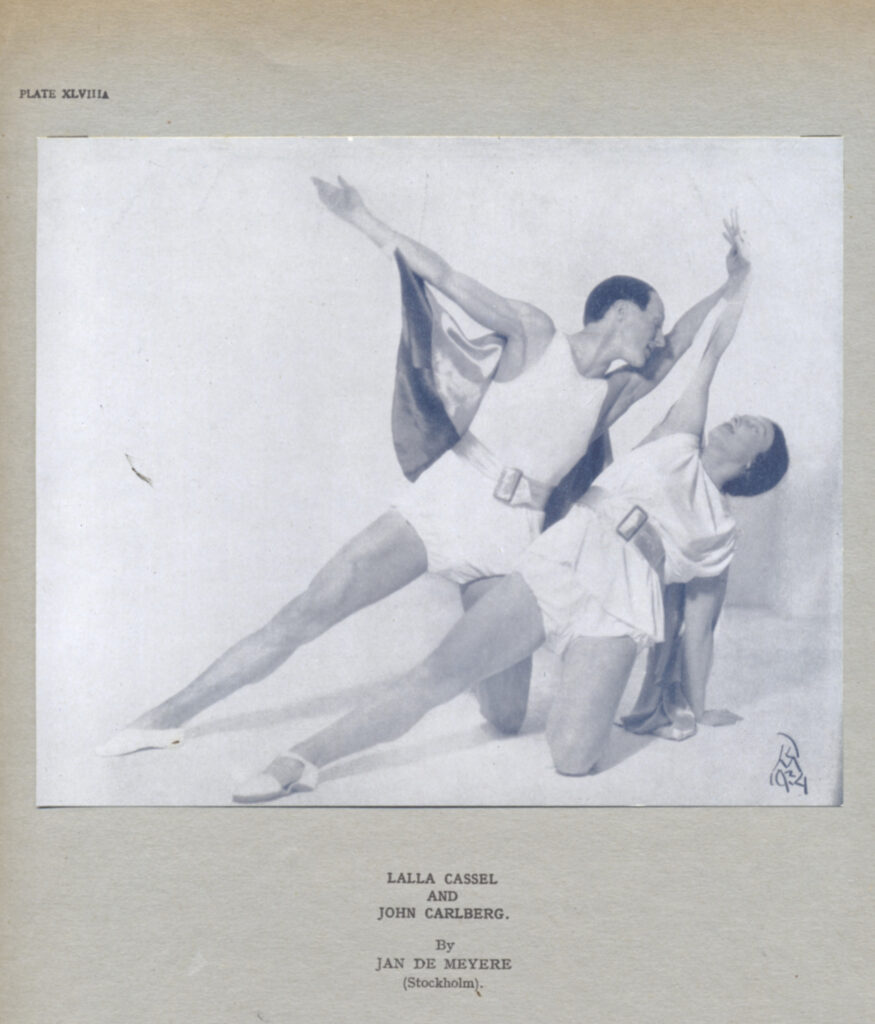
This stylish Art Deco inspired photograph has strong visual appeal.

War is over but is this reflected in Photograms of the Year for 1946? Given the introduction to this volume you would think so:

Despite this stirring introduction I can find very little photographically that reflects the war nor its cessation.

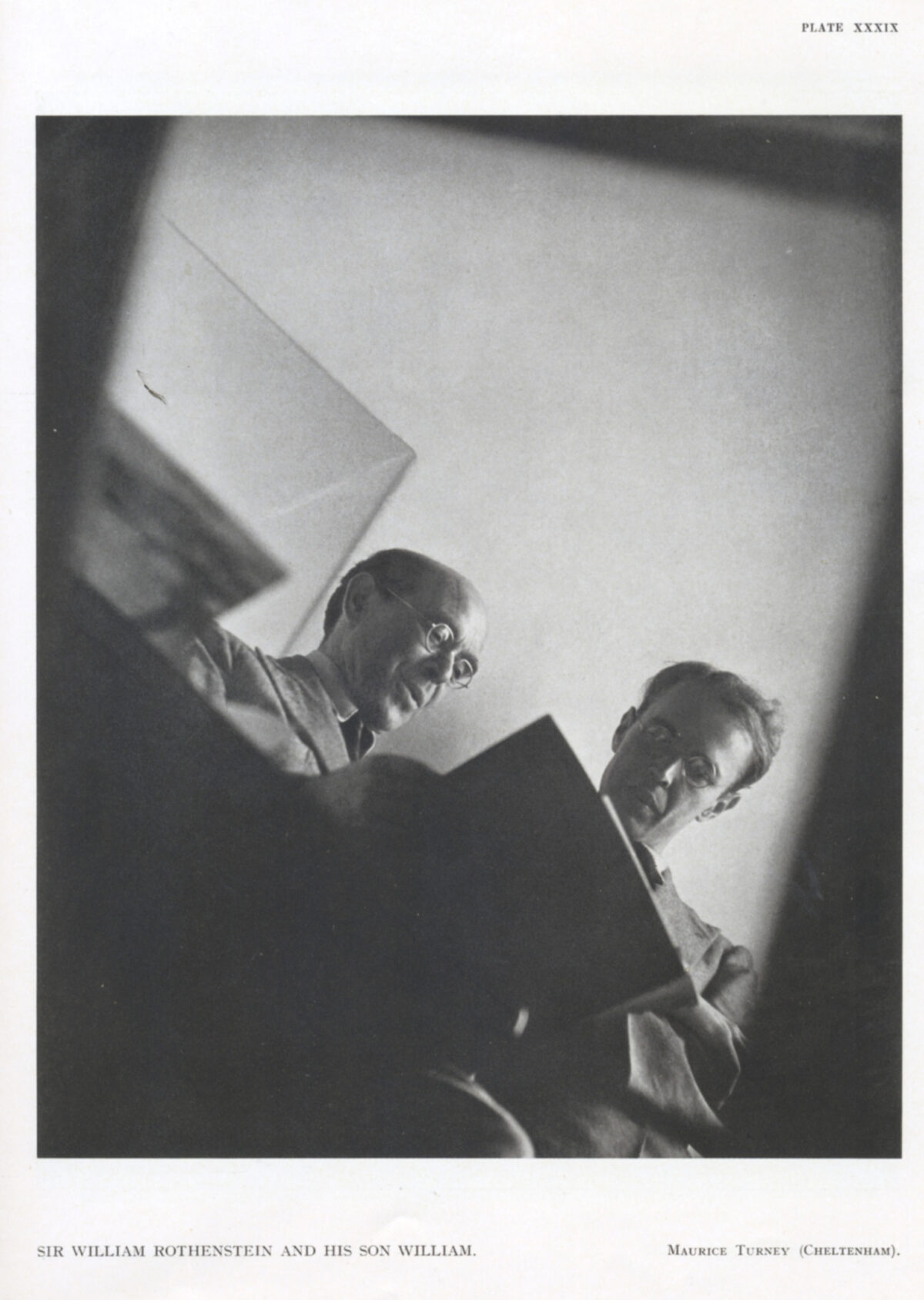
Intriguingly this photograph is difficult to interpret and there is no explanation although other entries have descriptions to help contextualise them. In 1941 there was still a non-aggression pact between Germany and Russia. The outbreak of hostilities between the two countries and the siege of Leningrad began in 1942. So was this photograph an ironic comment on the calm before the storm or just a portrait taken in Leningrad in 1941? Given that the photographer operated out of Bridlington after the war and was known for taking snaps of holidaymakers I suspect the latter to be true.

The Way of An Eagle is another stylish photograph portrayed in an impressionistic manner.

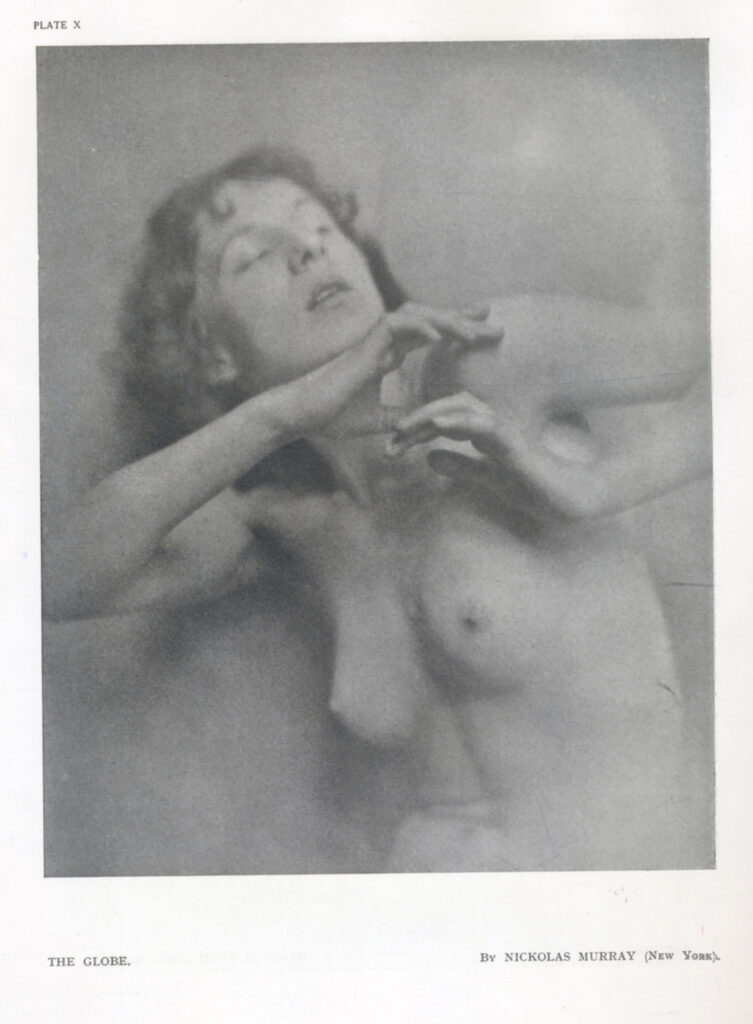
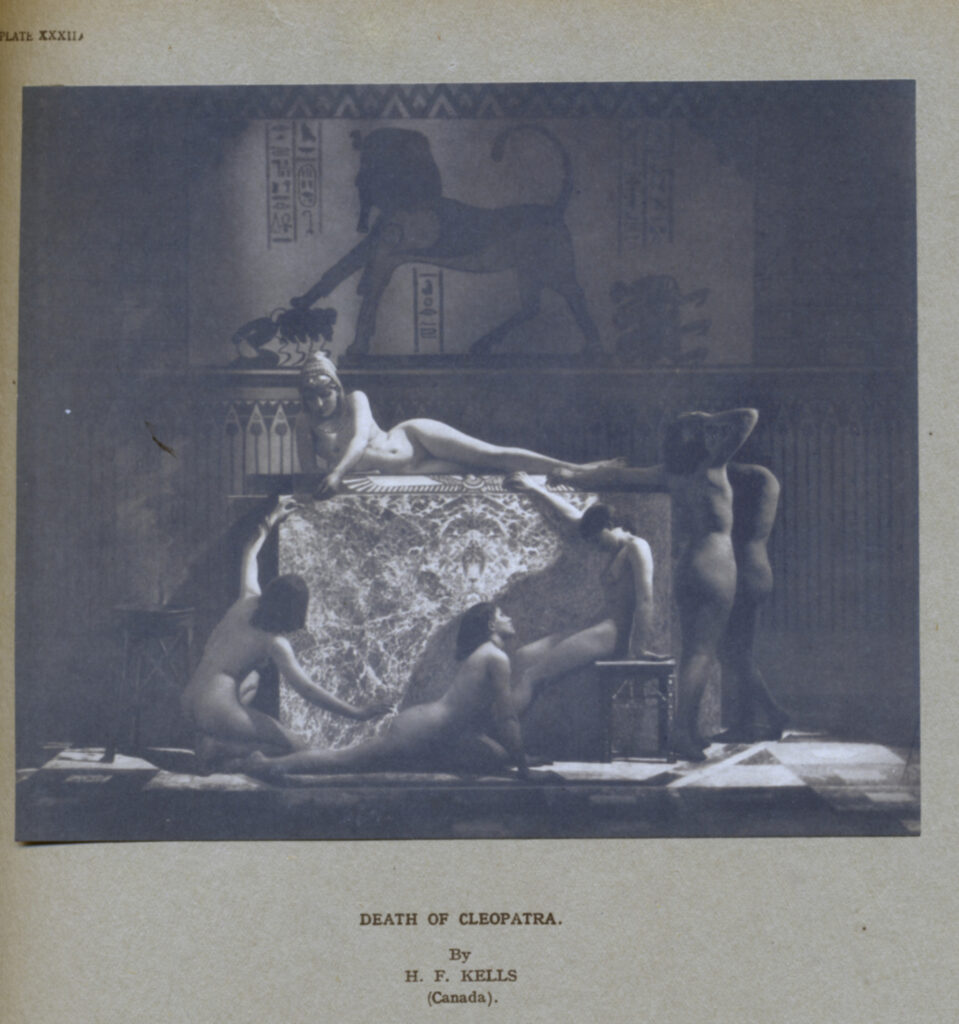
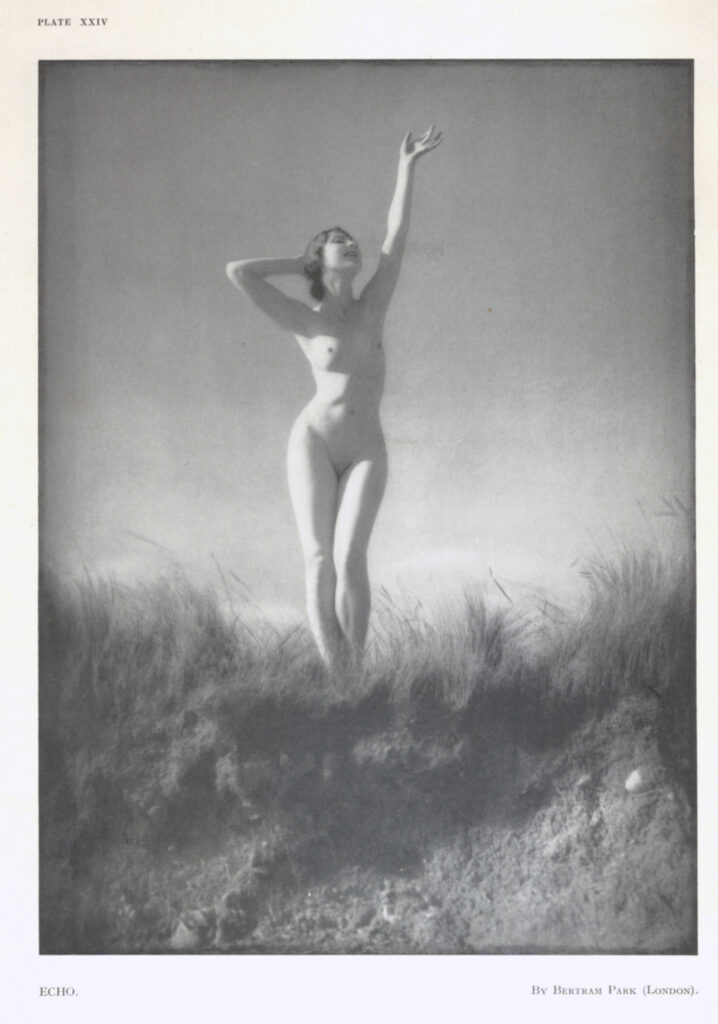
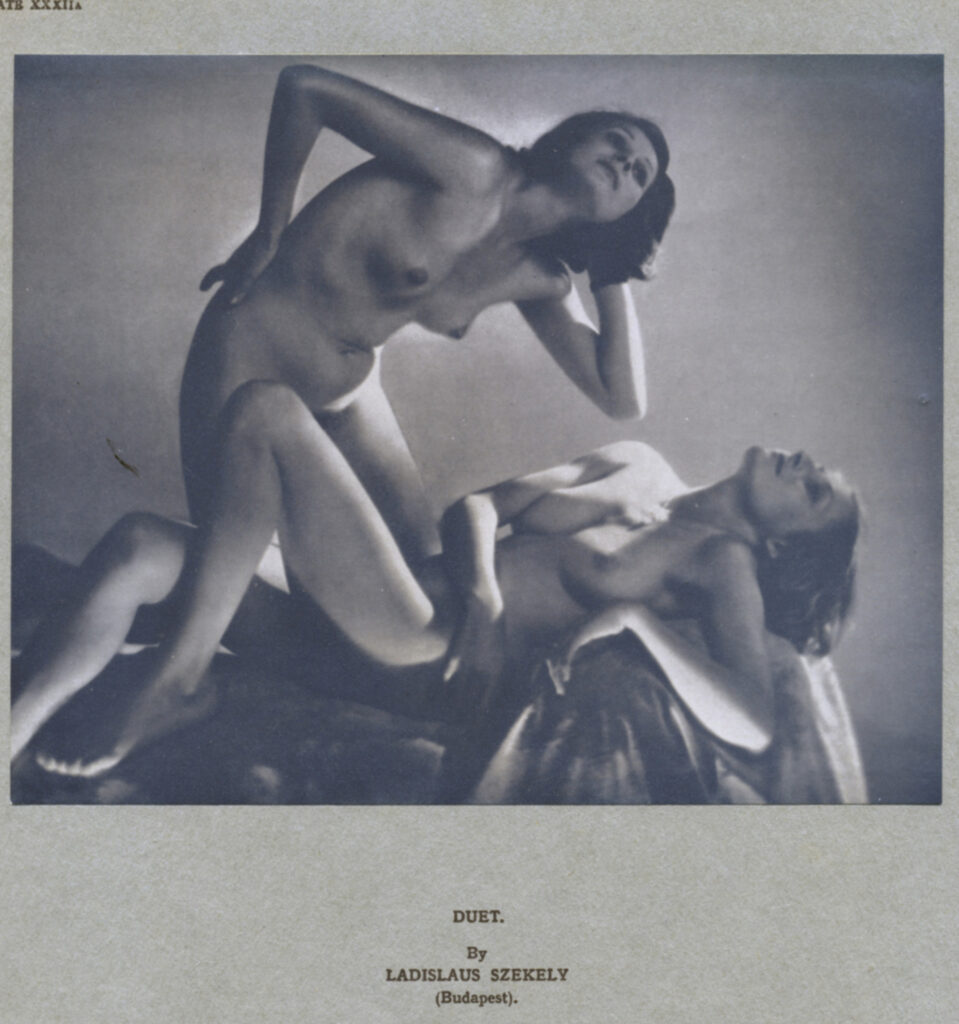
Artistry or cheesecake disguised as art?

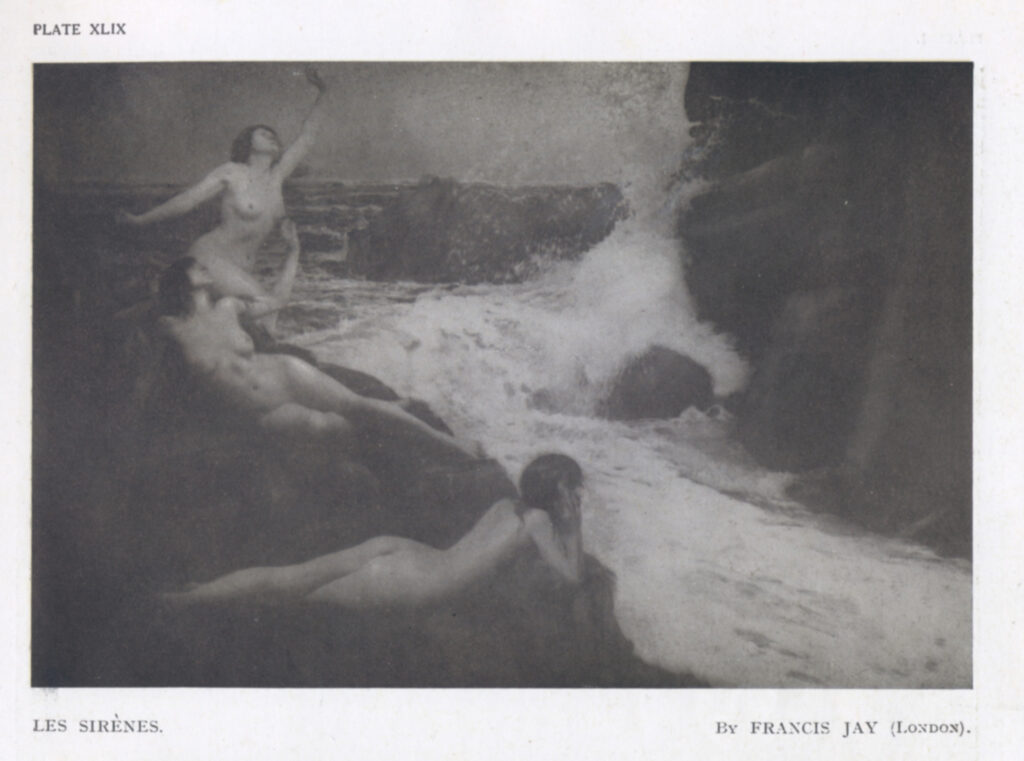
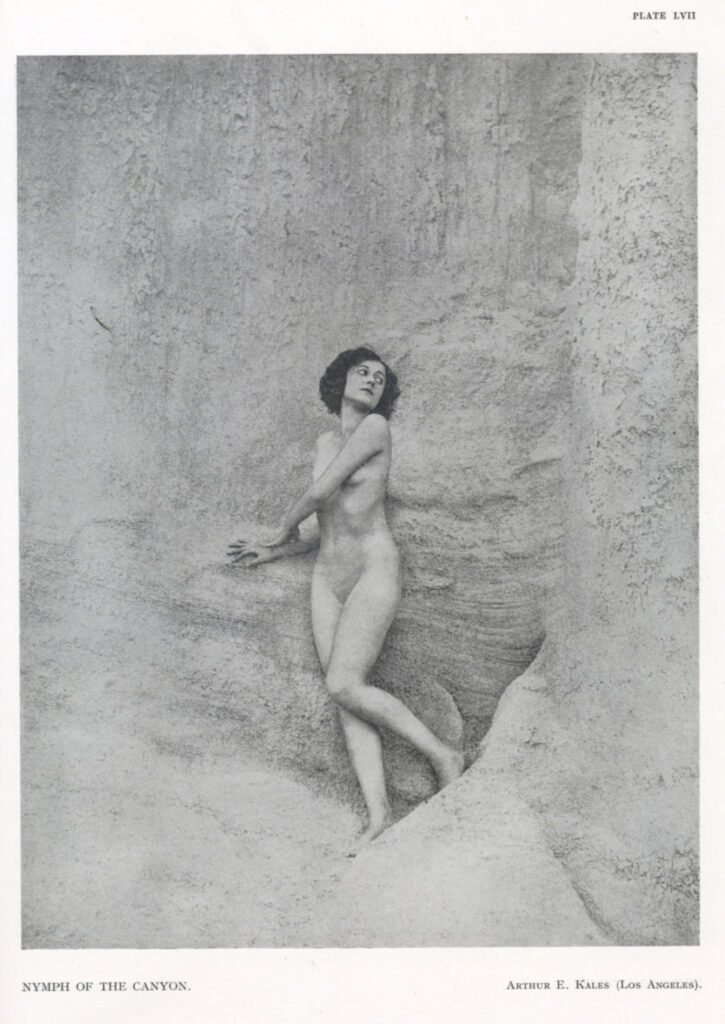
Classical allusions are often invoked in nude studies as seen here. Note that it’s a female photographer once again.

To my eye there is little in 1946’s Photograms to distinguish it from previous years. Elsewhere we have the usual pictorialist landscapes, odd still-lifes and closeups of faces with little acknowledgement of the war, certainly in visual terms, and no hint of the documentary traditions of such importance taking place away from the rarefied world of art photography.

Categories
Edwardian photography

Another Mystery Woman

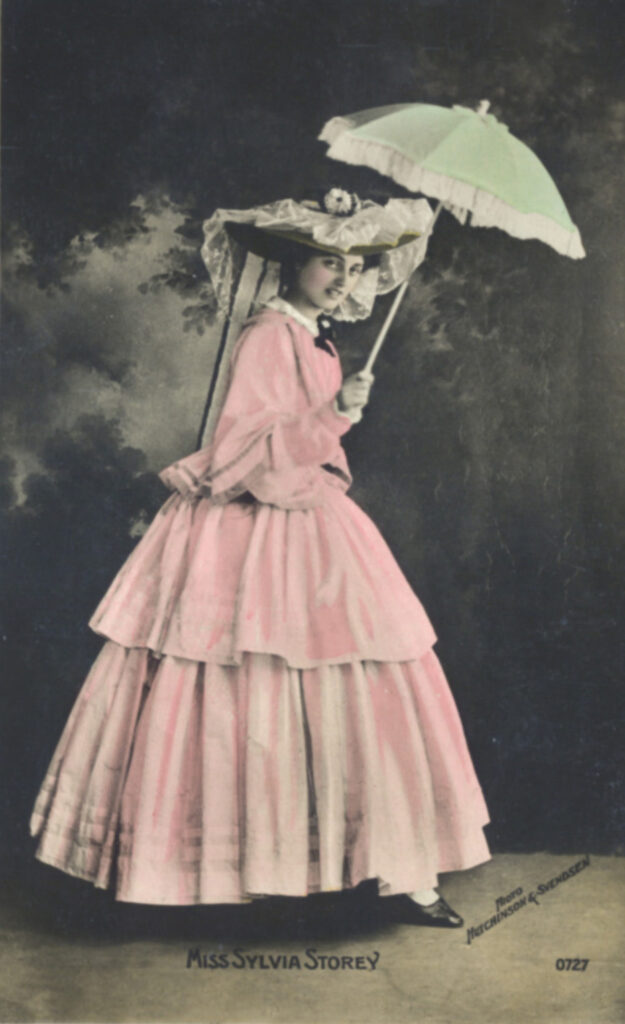
Three photographs that are a bit of a mystery. They are large prints 8″ by 10″. The woman is elaborately dressed and the backdrop sumptuously rendered. A series of letters and numbers in the corner of each shot gives no clue. They are all backed by black rice paper to which they have been glued, so from an album without any information on the back that can be recovered. I’ve only seen photos stuck to this kind of paper when they are of some age. My guess is that these were taken in the Edwardian era but I could be completely wrong.

Of course this is typical of many old photographs. Working out when they were taken is often a matter of guesswork. These three are silver gelatin prints which again points to early twentieth century but silver gelatin prints are still produced today although much less frequently.

Categories
photography Social history

Photograms of the Year 1929 – the Interwar Years

What’s going on in the World in 1929? Interesting though Photograms of the Year is, you won’t find many answers therein. Each year a paragraph or two is devoted to photography in various countries. In Germany it was now the time of the Weimar Republic, a term coined by Hitler, characterised by hyperinflation, competing paramilitaries and general unrest. None of this is mentioned in the short essay on Germany which, instead, presents a word salad of little meaning such as “no longer the photography we have been calling artistic until a couple of years ago; not the photography based on the traditional principles of pictorial effect.”

“The Secret” shown above could be straight out of Teutonic mythology but is by a Manchester photographer. In some ways this reminds me of the paintings of Evelyn De Morgan as well as referencing back to the Pre-Raphaelites.

“Portrait”, at least gives a contemporary view of a flapper with its Art Deco overtones.

Wildlife photography is not well represented and I can’t help wondering whether this is a live stoat caught in action or a stuffed specimen posed for effect.

“The Terror of the Desert” is one of my favourites from this collection with it’s almost surreal depiction of desert and cloudscape.

In Pseud’s corner we are offered “A Thrush Sings” and “All Nature is But Art.” There are others but these two will suffice.

It’s quite kitsch but I find “Three Ducks” rather charming.

I’ll finish with this photograph of “Ulla Poulson,” a kind of portraiture that Photograms of the Year does so well.

Categories
Dance Music Hall photography Social history

Vintage Dancing Girls of Preston

A series of four photographs all from the studio of Arthur Winter of Preston. This one has a date of 1935 on the reverse and handwritten “The Maid of the Mountains.” It turns out that “The Maid of the Mountains” was a successful light operetta performed often in the first half of the twentieth century by various different companies and troupes. A search of the British Newspaper Archive reveals the following advertisement:

So, although I can’t be certain, it seems likely from the date that the photograph is of the chorus from the Preston and District Amateur Operatic Society.

Three further photographs from the same studio and date are probably of dancers from the same Society.

Not sure how I feel about “AI” generated videos from old photographs but the results are always interesting. The software seems to have invented some extra dancing girls for “The Maid of the Mountains.”

A second video generation seems altogether unlikely and too modern in style.

Categories
photography Social history war

Photograms of the Year 1941: but Don’t Mention the War

It’s the middle of the war and this photograph is the only one in “Photograms of the Year 1941” related to wartime. Everywhere else it’s business as usual. An introduction was added after the volume was assembled and includes the following: “The fact that it includes practically no photographs of warlike subjects is an indication of the place that real picture-making holds in the hearts of the people who practice it. Camera records of various phases of the war at home and abroad may be left to the Press photographers whose business it is, through the illustrated papers and the newsreels, to show the world realistic details of what is being done to the world under arms.”

I take this to mean that only the kind of photos included in the volume are to be considered “real picture-making” whereas war photography is not. This seems not only wrong to me but ignores the artistry of war photographers and the documentary tradition. A corrective for today might be to look up World War II photographers using wikipedia though I note the omission of Lee Miller from both World War II photographers and holocaust photographers. (Her individual entry gets it right though).

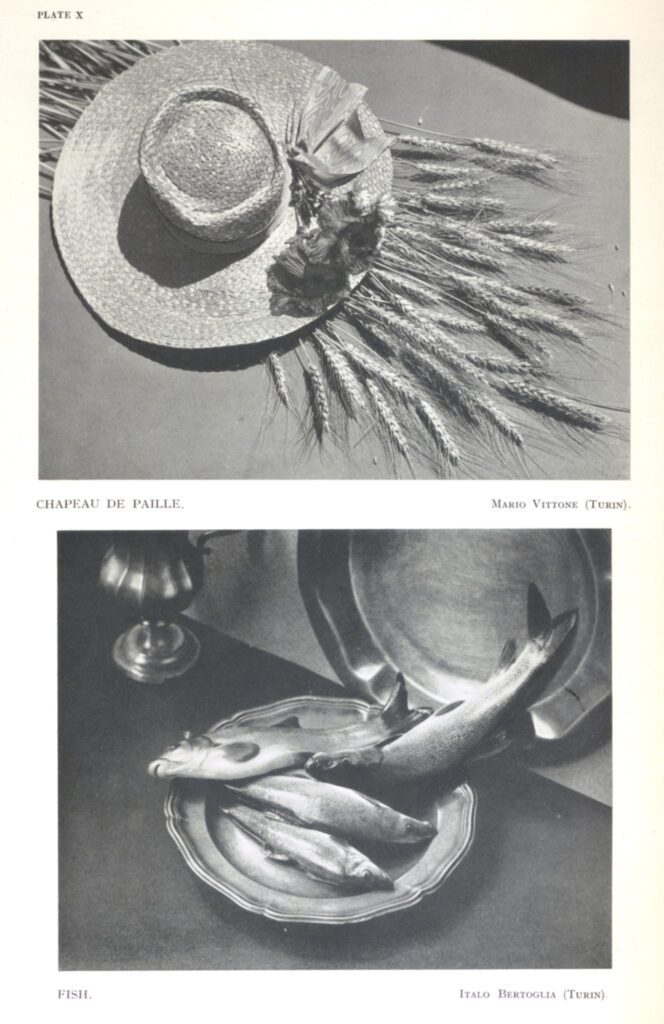
Landscape in pictorialist style is well represented as usual as are still lifes:

There are the usual nudes and figure studies. For instance this example of using a classical reference to present a nude:

Personally I find “Idol” to be a much more appealing image and I note that, once again, the female nude is just as likely to be taken by a female photographer as a male one at this time.

“Cherry Time” is another example of the use of classical reference and a pictorialist style.

You won’t be able read the above but it is an example of 21 pages listing camera clubs in the UK which perhaps gives an indication of how popular photography was as a hobby, even in the midst of war. I note that the camera club to which I belong today was listed as being operational in 1941.

Categories
photography Social history

Photograms of the Year 1952: The Wonderful and Weird

The 1952 edition of Photograms of the Year contained the usual, sometimes odd, mixture of themes and styles. Pets continued to be popular subjects proving that cats and dogs ruled long before the advent of the internet. We forget that at this time getting a photograph published was only for the professional photographer or gifted amateur whereas today anyone can post on facebook, instagram and many other platforms no matter how good or bad their work is.

The photo of the black cat is entitled “Actor?” and is by Felipe Maiaru.

As usual, pictorialism is well represented as seen in Copmere by John D Jones and Dawn Departure by H S Newcombe.

I’m always complaining about weird photos of children and old men or ethnic types with lots of wrinkles in these older publications so it’s only right I’ve included examples to show what I mean. Ethnic wrinklies are still popular today whereas it’s difficult to imagine anyone publishing photos of crying infants. (I think I can say wrinklies because I am one myself.) You’re seeing Breaking Point by Ann-Marie Gripman and The Painter by Holt Madson.

Fireside Beauty by Karel Jan Hora is more aesthetically pleasing perhaps. And if you’re here for the nudes:

You’re looking at Juno by Joan Craven and Low Key by W.A.J. Paul. The notes that go with Juno say “Nude photography is one of the most difficult branches of photography with many pitfalls, but when it is successful it is usually more than justified. It must be idealised in some way or it merely becomes portraiture without clothes, which would not be regarded, to say the least, as in good taste.”

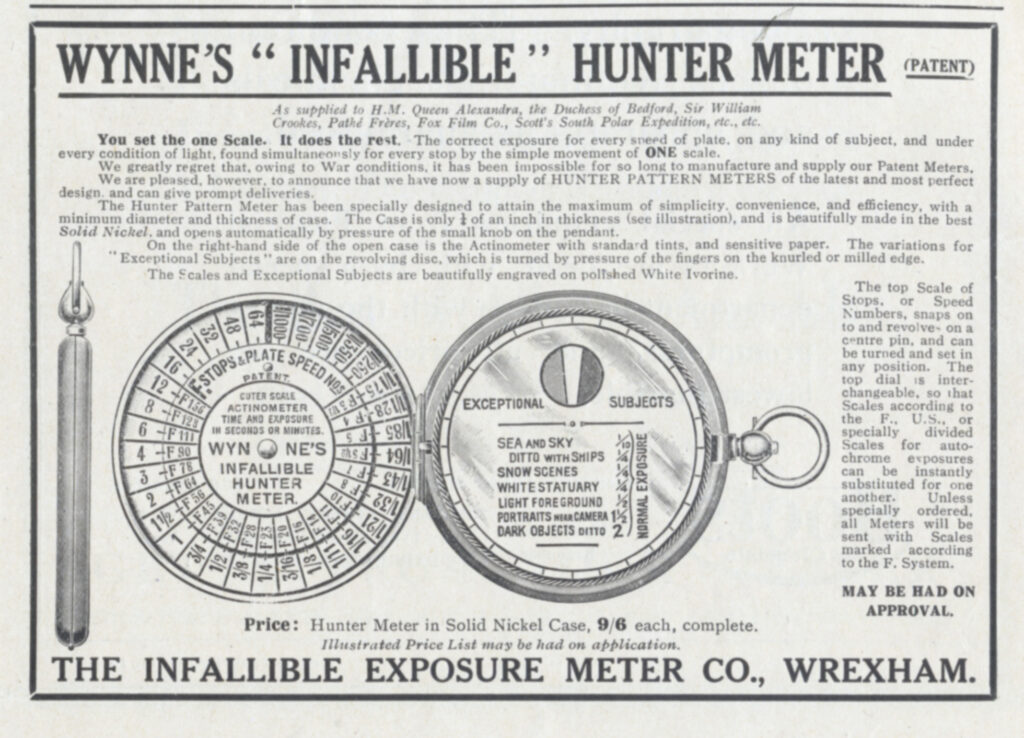
Finally you could expect to find several pages of advertisements at the end of each edition of Photograms of the Year. Often the adverts were surprisingly wordy though this one let a striking image do the talking.

Categories
photography Social history

Photograms of the Year 1950

For me this photograph by Chin San Long is the outstanding image from this volume. Wikipedia has this to say about him:

Lang Jingshan  (4 August 1892 – 13 April 1995), also romanized as Long Chin-san and Lang Ching-shan, was a pioneering photographer and one of the first Chinese photojournalists. He has been called “indisputably the most prominent figure in the history of Chinese art photography”,and the “Father of Asian Photography”. He joined the Roral Photographic Society in 1937 and gained his Associateship in 1940 and Fellowship in 1942. In 1980, the Photographic Society of America named him one of the world’s top ten master photographers. He was the first Chinese photographer to take artistic nude shots, and was also known for the unique “composite photography” technique he created.”

It’s well worth seeking out his other work but forget about buying an original print – you couldn’t afford it!

Elsewhere you can find more impressionistic images in keeping with the original aims of the annual.

Portraits are not neglected as you can see from these two examples.

And of course there is more than one obligatory nude.

Photograms of the Year always include long interpretive essays and I was struck by what Bertram Sinkinson has to say: “The tendency to produce bizarre effects in an attempt to be original is receding and in its place we have abundant evidence that the pictorialist is more conscious of his responsibilities in the creative sense.”

I was tempted to do a good, bad and ugly section but some of the ugly work is naff to say the least. One of the weird things that seems to feature in this publication and other photographic books and magazines from the early part of the twentieth century is shots of very young children crying. Why this was popular I have no idea!

Categories
Dance photography Social history

Vintage Dancing Girls: The Bensaid Twins

Peggy and Mollie Bensaid, known as the Bensaid Twins, were a celebrated British dance and performance duo whose remarkable showbiz career spanned almost 70 years.

They began performing as part of a youth dance troupe and quickly gained recognition in theatres and summer camps across the UK. There are many photographs of them at a young age.

There are also photos of them performing solo.

During World War II , the twins toured extensively, performing for British troops and the American Red Cross. Later they reinvented themselves as Britain’s only female clown duo.

Apparently they were separated for many years but reunited in a nursing home. They also featured in a documentary about “Hundred Year Old Drivers” which you can find on youtube.

Categories
photography

Photograms of the Year

This is “Where countless feet have trod” by G E Pearson and appears in Photograms of the Year 1960.

Photograms of the Year was first published in the 1890s and went on until the early 1960s. It’s a bit of a mystery how it got its name as a photogram is defined as “a photographic image made without a camera by placing objects directly onto the surface of a light-sensitive material such as photographic paper and then exposing it to light.” However these annuals published photographs rather than photograms.

This one’s “A Cup of Coffee” by Hindrich Pundsack and I’d classify it as a street photograph, so more documentary than posed.

This portrait by Rune Lindscog belongs to the tradition of portraits influenced by classical paintings. ChatGPT tells us that “Photograms of the Year” was an influential annual photographic publication that began in the late 19th century, playing a key role in showcasing artistic and technical excellence in photography during its time.

It also states the publication “included reproductions of high-quality prints—especially from the Pictorialist movement, which emphasized beauty, atmosphere, and personal expression in photography.” The work of Kate Smith (see previous post) would be more typical of the earlier volumes of this publication.

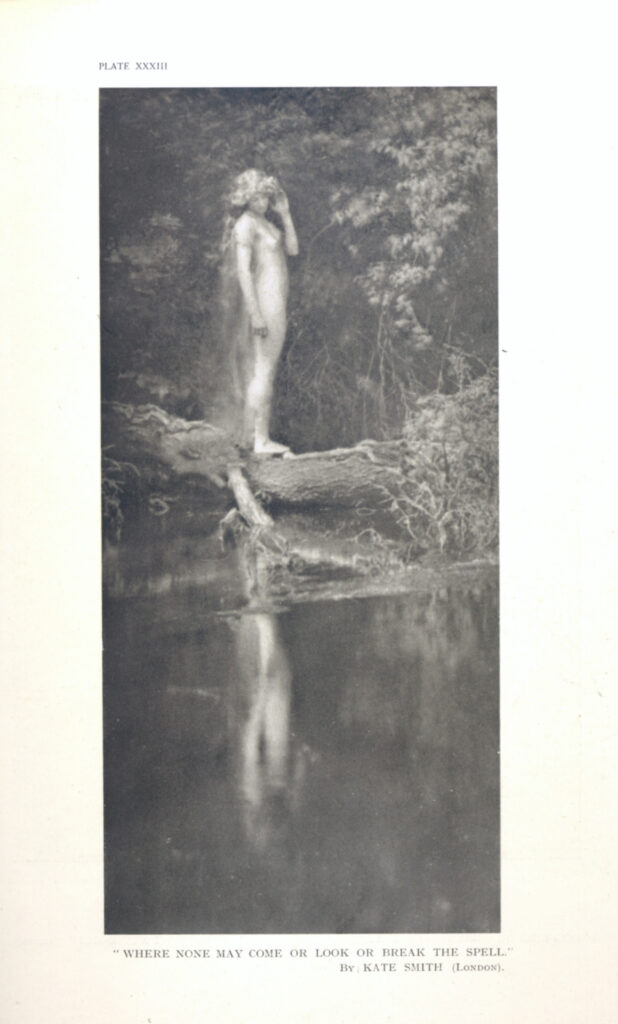
Of course no photographic review would be complete with the obligatory cheesecake style of photo though the range of such shots ranged from the more stylised work of Kate Smith to straight nudes.

I’ll post some more photographs from Photograms of the Year in future. Some of the work is still of artistic merit and some is not. Some techniques such as solarisation have aged badly in my opinion, unless you’re Man Ray. Other trends in photography just look plain weird to the modern eye such as portraits of young children, sometimes in tears, which are icky* to say the least.

*A technical term.

Categories
photography

Kate Smith Pictorialist

I recently became aware of a photographer called Kate Smith who was once a well-known pictorialist. Here’s a typical photo “By a Cool Stream.”

According to the Ebayer I obtained this print of “Nymph” from:

“Prominent Pictorialist Kate Smith was born near Watford the daughter of Joseph Gutteridge Smith (1823-1914) a paper manufacturer and Mary Elizabeth Hepburn (1834-1885). She exhibited at the Royal Photographic Society from 1903 until 1934 becoming a fellow of the RPS in 1927. Kate Smith had solo exhibitions at 35 Russell Square in 1925 and 1926 and was described by Cecil Beaton as perhaps “the precursor of Baron Demeyer”. She specialised in photographs of single female figures, nude or in diaphanous costume within romantic landscapes, many of her pictures being modelled by friends in her garden or nearby countryside. They were frequently published in society periodicals such as the Sketch and the Bystander between 1907 and 1914. In 1925 had the unusual honour of addressing the RPS in a lecture describing her approach to photography and working method.”

It is notoriously difficult to obtain information about early pictorialist photographers with the exception of a few famous names such as Clarence H White and Alfred Stieglitz. Web searches often yield little or nothing.

In this instance ChatGPT was able to find more information than other sources and the results were in agreement with the quote above and were referenced so we can probably trust them to be correct:

“Here’s what is known about the British pictorialist photographer Catherine Mary “Kate” Smith:

📸 Background & Life

🎨 Photographic Style & Subjects

🏅 Exhibitions & Recognition

  • First exhibited at the Royal Photographic Society (RPS) Salon in 1903; she exhibited almost annually up to WWI and again post-war sistersofthelens.com.
  • Joined RPS in 1908, became Associate (ARPS) from 1920, showcased her own one‑woman exhibition in 1925, and in that year earned Fellowship (FRPS) sistersofthelens.com.

📷 Equipment & Workflow

  • Often photographed around her home with a 3¼×4¼ Adams Vesta camera fitted with a Zeiss lens flickr.com+1flickr.com+1.

🌾 Notable Work

  • For example, Earth’s Bounty (1912) is a classic demonstration of her style—depicting a softly-lit, mythic figure in a wheat field—exhibited at the 1912 Salon flickr.com+1flickr.com+1.

📚 Summary
Catherine Mary “Kate” Smith was a key figure in British Pictorialism, intertwining romantic narratives, soft-focus aesthetics, and myth-inspired themes in her photography. Her steady presence in RPS exhibitions, eventual Fellowship, and evocative images set in nature mark her as a distinguished contributor to early 20th-century fine art photography.”

The website Sisters of the Lens is a useful resource for finding information about other late nineteenth and early twentieth century female photographers.