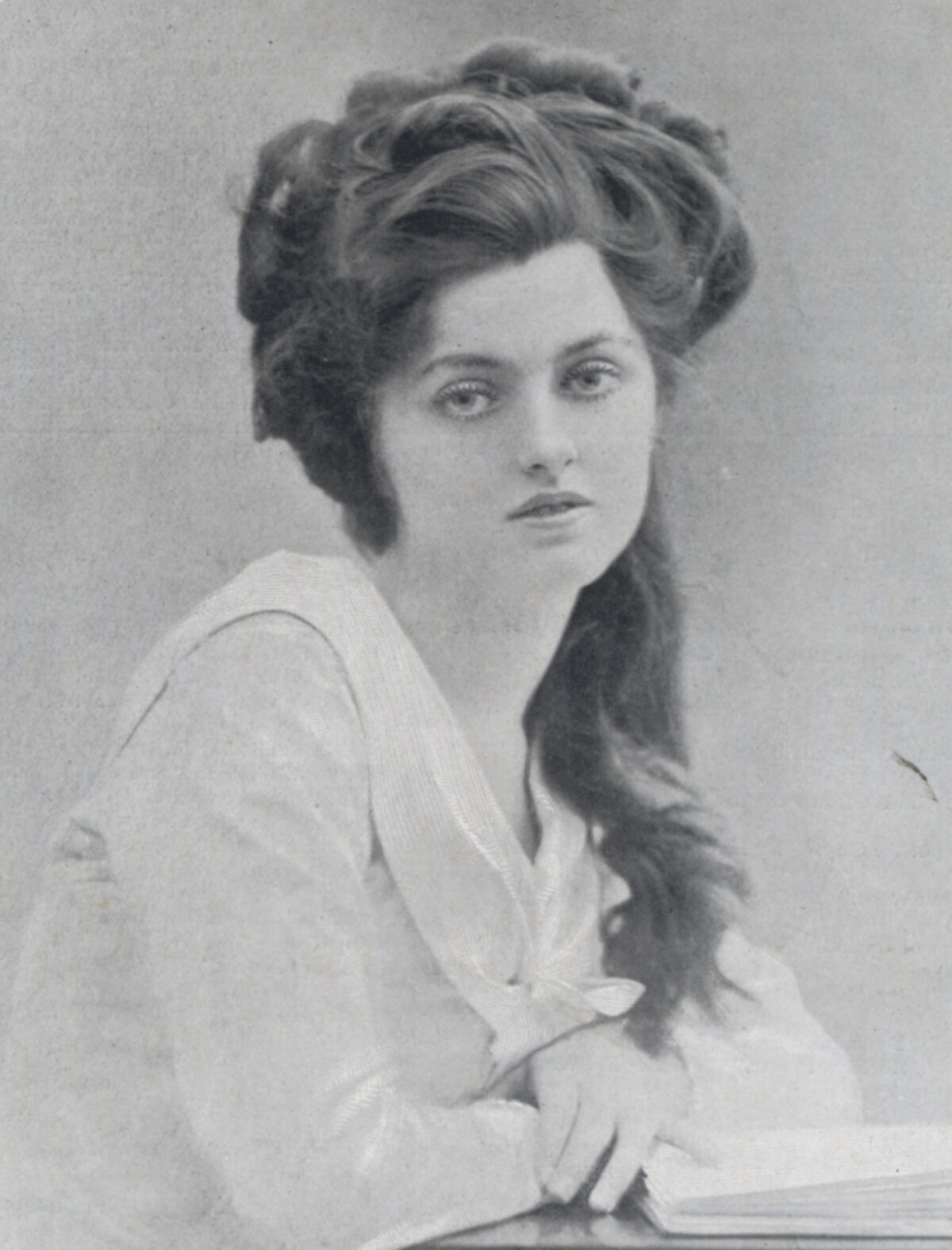
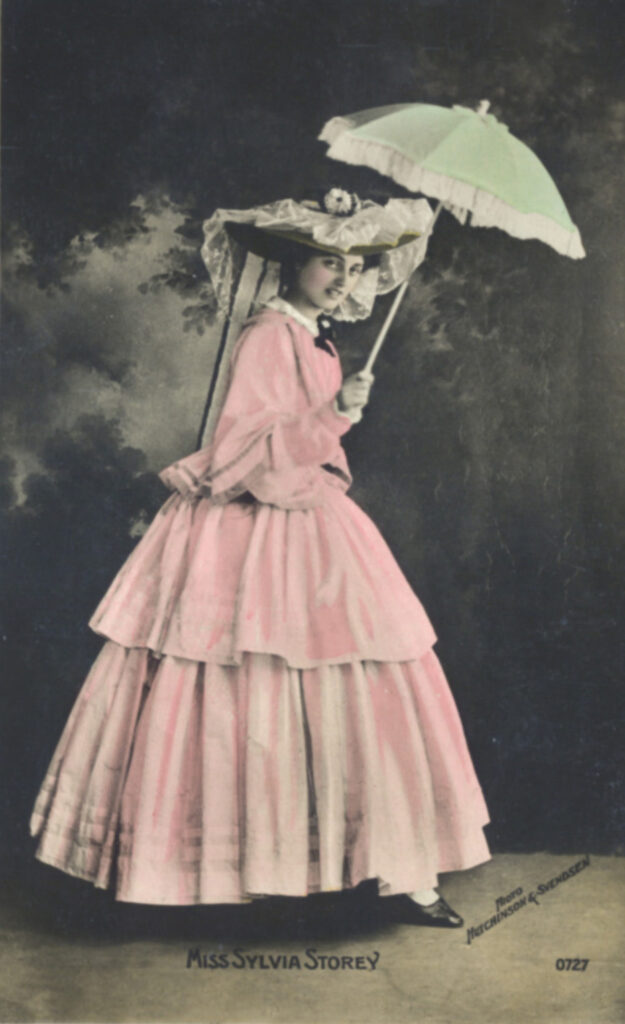
Sylvia Storey was a British stage performer associated with Edwardian musical comedy. She was linked to the Gaiety Theatre, London and hence was known as a “Gaiety Girl.”
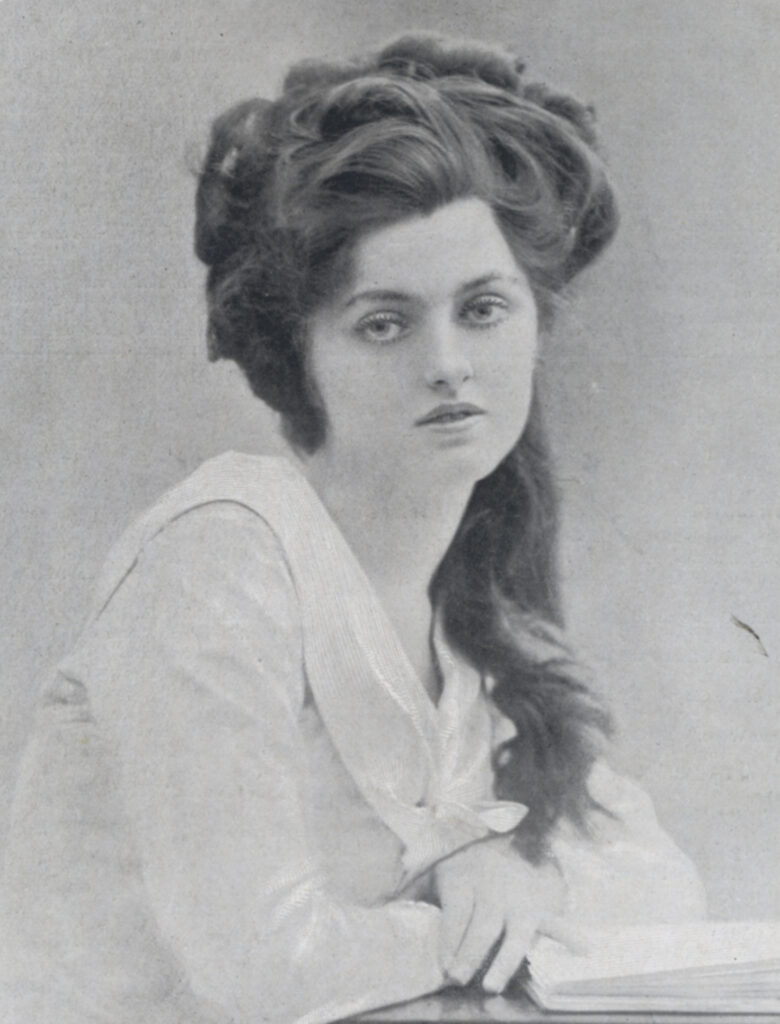
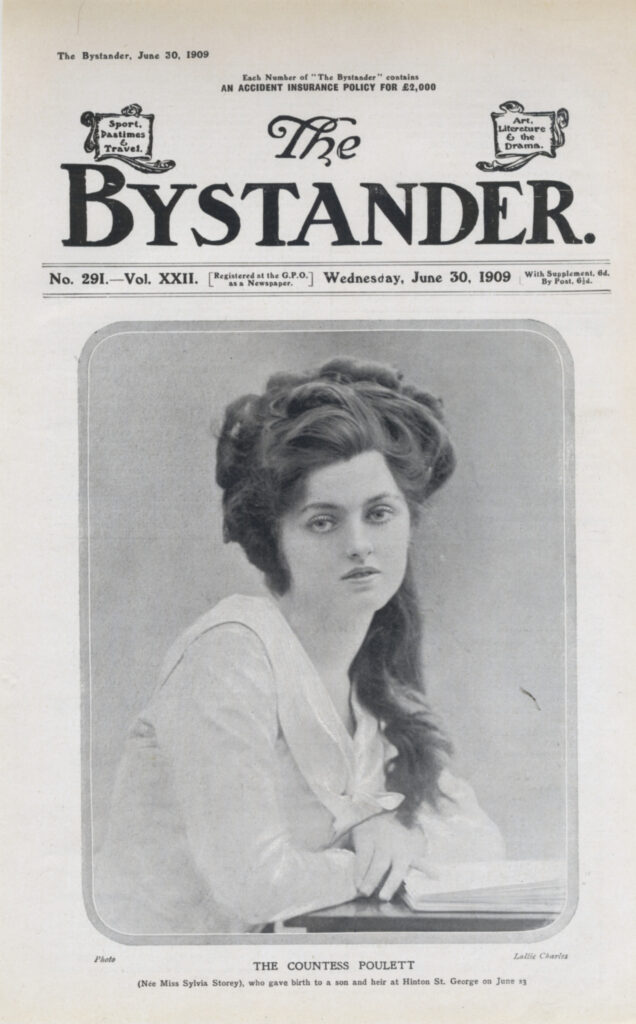
The image at the top of the page comes from an edition of The Bystander dated June 30th 1909 by which time Sylvia had become the Countess Poulett. She married in 1908 and she and her husband travelled around the world. William Poulett, 7th Earl Poulett died in 1918 during the flu epidemic.
After she was widowed she became a socialite spending time in the United States. While spending time with Coco Chanel and the Duke of Westminster on his yatch, the Duke’s wife became jealous and threw Poulett’s belongings overboard.
In later life she took a cottage in Somerset.
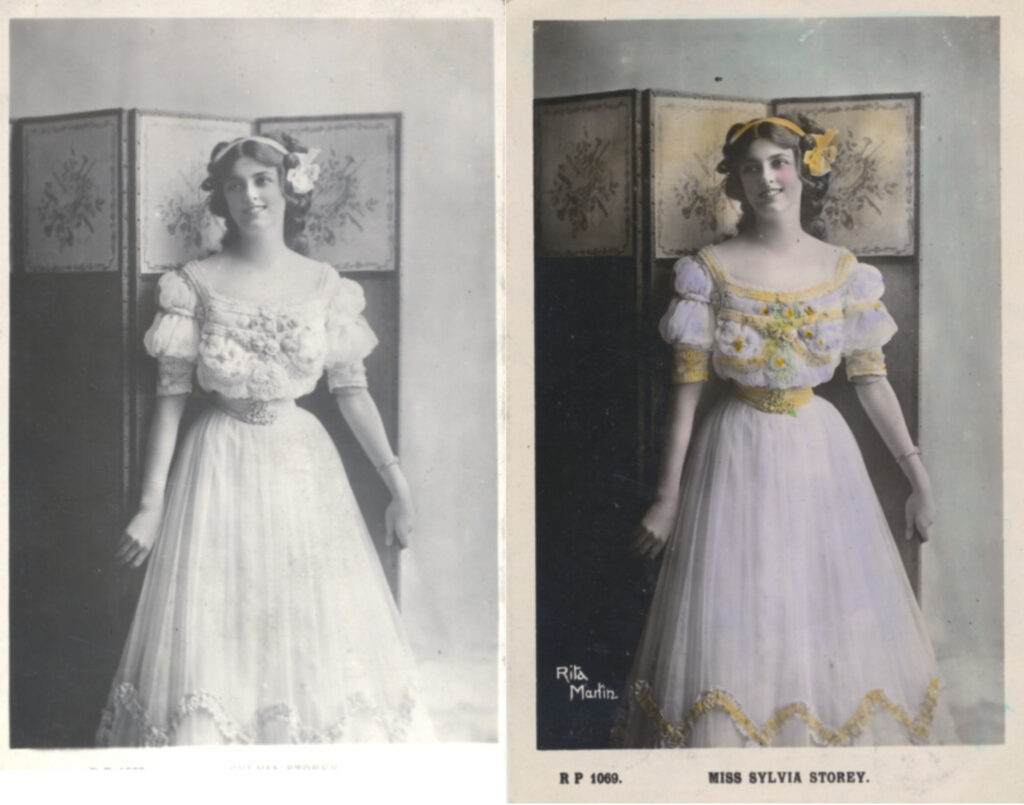
Gaiety Girls were to be seen in chorus lines and were reputed to be more refined than other dancing girls in the music hall. As well as dancing they often posed for postcards and cigarette cards. Above you can see Sylvia in both black and white and colourised. Purists tend to frown on the practice of colourising old photographs today but it was common practice in the early twentieth century. The process of colourisation was carried out by “hand tinting” though this effect was was achieved in different ways.
The practice of hand tinting will be described in more detail in a later post. There will also be more information about Gaiety Girls. Sylvia Storey was far from the only Gaiety Girl to marry into the aristocracy.
Here’s another colourised card of Sylvia Storey. There are many more postcards of Sylvia out there and I will be adding them from time to time.
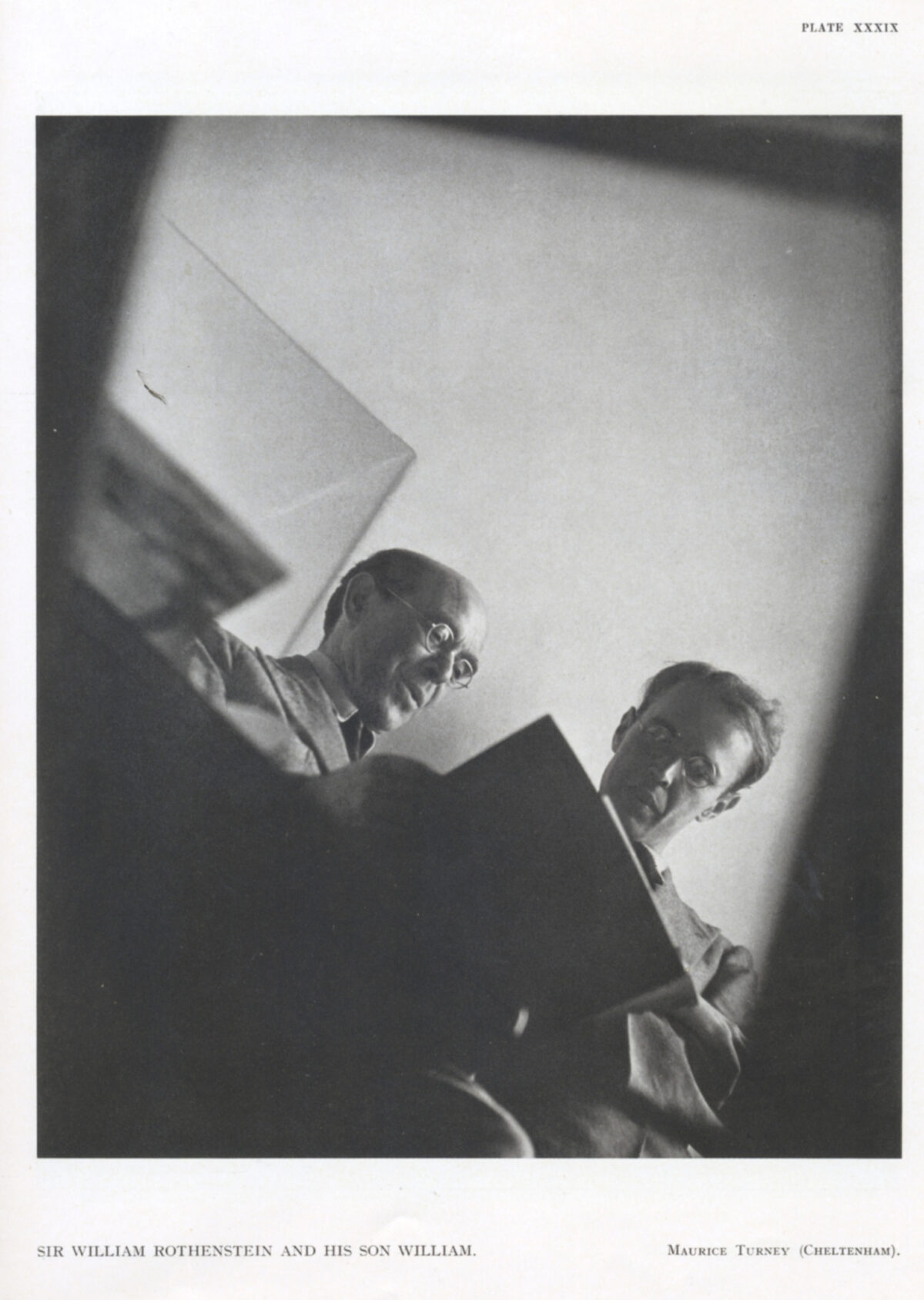
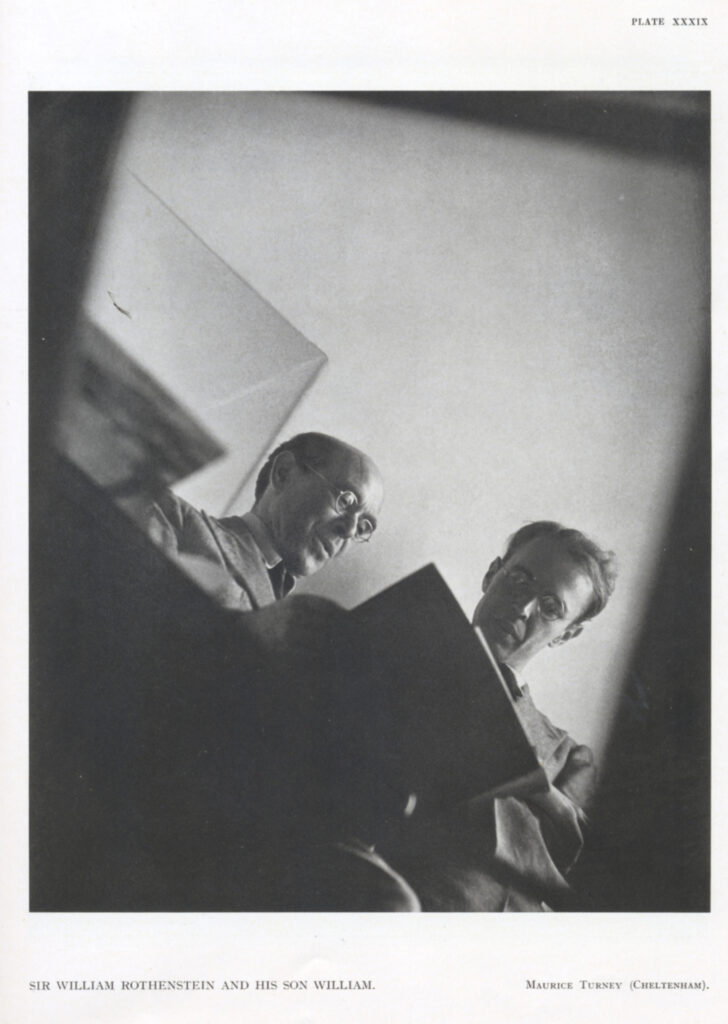
It’s always tempting to judge these old photographs by modern standards. Take this photo of William Rothenstein and son. By modern standards I would judge this to be a very successful portrait and the low angle and framing adds to the effect. However, the 1936 annual opines that it “goes considerably farther from the accepted standard, for not only are the figures seen from a viewpoint appreciably lower than usual, but they are also shown at an angle that is a departure from the normal vertical. Whether the end has justified the means or not must be left to the reader to determine.”
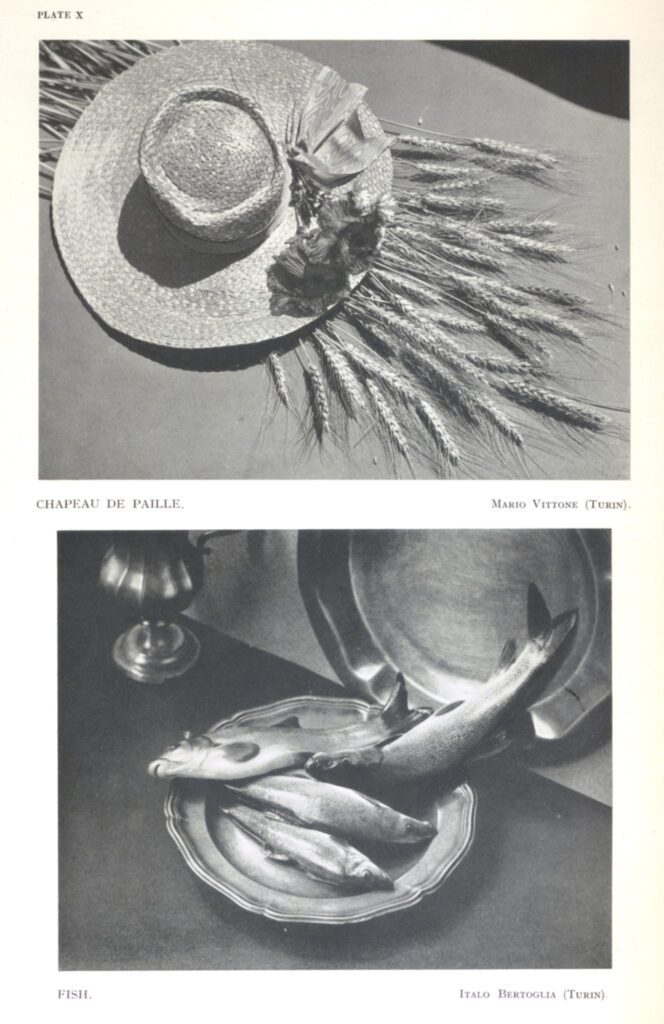
In contrast this pair of photographs seem quite pedestrian by modern standards and I feel sure they would receive low marks if seen in a modern camera club competition. (Not that would necessarily be a gold standard by which to judge photographs).
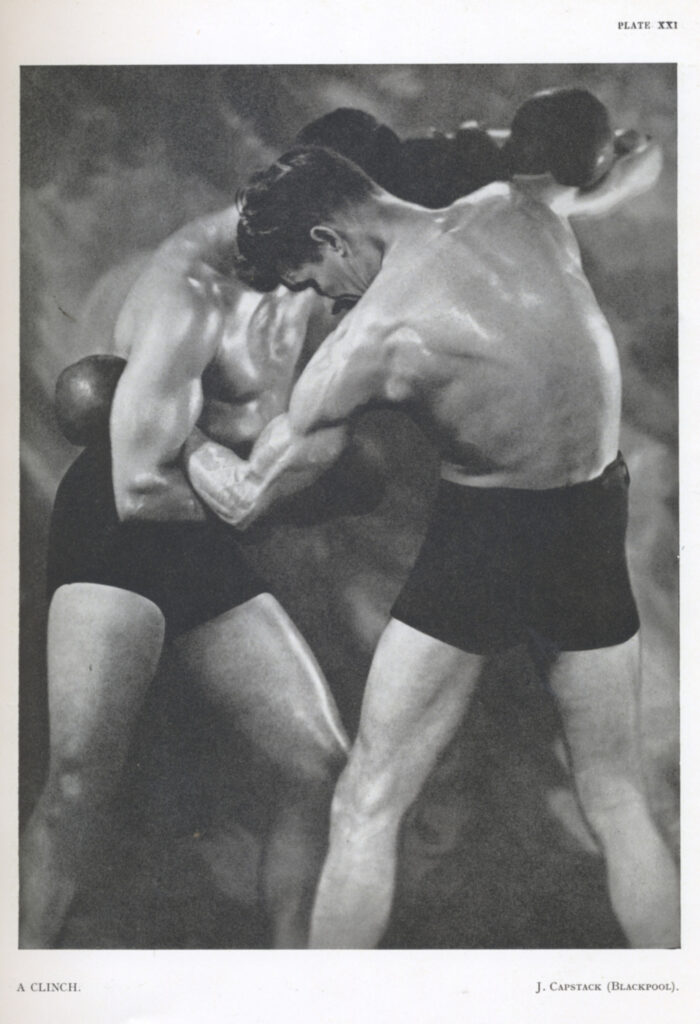
The photograph of this pair of boxers appears more modern in tone though obviously posed. Today you’d expect to see an action photograph of a real bout.
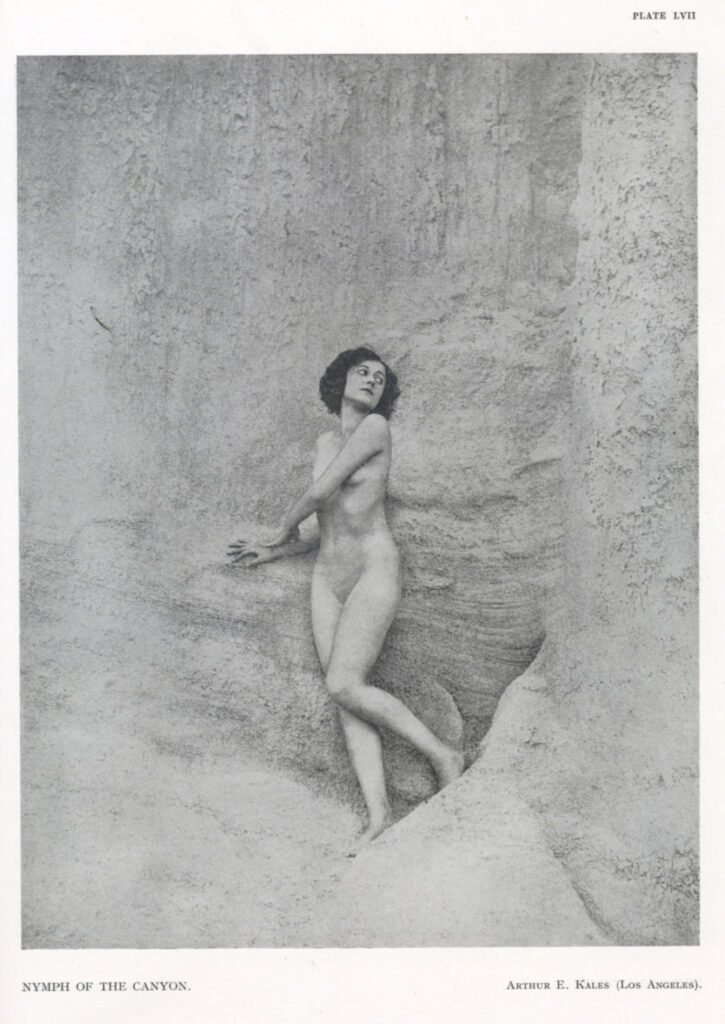
Arthur Kales was a relatively well known photographer and this nude would, I suggest, be very acceptable in a modern context.
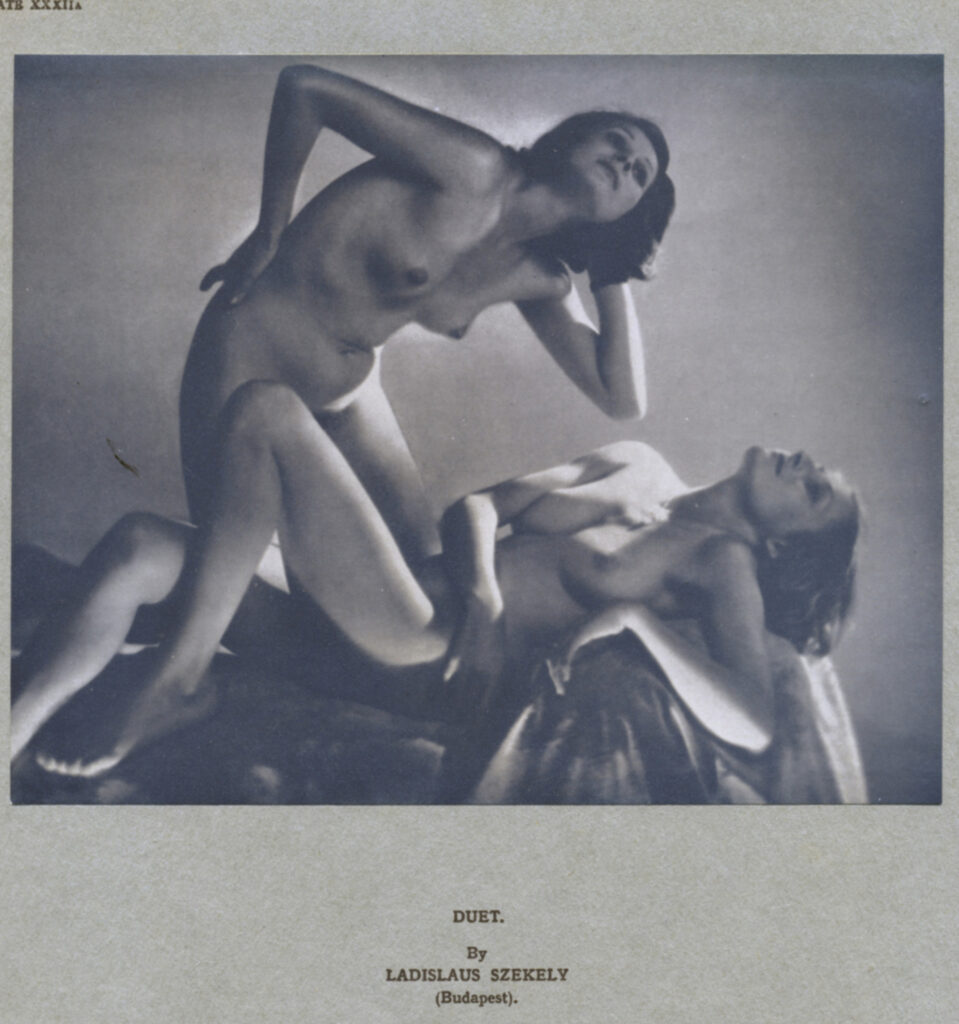
“Duet” owes rather more to Victorian ideas of classicism and I doubt it would be acceptable in mainstream photography today but I could well be wrong as the line between art nude and soft porn is hard to define.
As usual I have just picked out a few favourites to fit my narrative but the 1936 edition of Photograms of the Year had its full complement of still lives, portraits, landscapes, abstract compositions and often sickly cute shots of children and animals. For some reason there was a larger than usual representation of nudes this time around and I’ve only picked out a couple to discuss here.
As with literature it is a foolish endeavour to judge by modern standards but nevertheless it is interesting to see how standards have changed.
1945 and the end of the war. Photograms of the Year has this to say:
“Photography in this country during 1944 tells a tale of difficulties, distress and tragedy, and of valiant and vigorous reaction.” It goes on to list some of the people who have died as a consequence of war including F.J. Mortimer, long time editor of Photograms of the Year.
The two photographs above reflect something about attitudes to war. Both “Warrior of the Stars” and “Spitfire Fighter” are undoubtedly wonderful photographs but do they reflect the true nature of war? Elsewhere there is a portrait of a naval officer but nothing else connected to the war. As before I’m surprised to find nothing of a documentary nature about the war. Considering Lee Miller was photographing much more graphic war images, for Vogue no less, the omission seems hard to understand.
When you note there are as many images of dogs in this edition of Photograms as there are of war it makes the omission of more military-related material seem even more odd.
Can you spot the “gentle satire of this graceful picture” entitled “Victorian Vogue?” I’m not sure that I can.
This time around the nudes include “Pleasant Reflection” and ” The Reading Girl.” Commentary notes that “Miss Mason would have made an even better picture if she had confined her subject to the reflected figure … the reflection has qualities of grace, charm and gaiety.” And clearly you should not be looking at the Reading Girl’s breasts but “the dark curtain repeating the dark tone at base of picture, the lines of shadow on the divan on which the model is sitting and the suggestion of shining sunlight through the window.” (Yes, I am having my cake and eating it too!)
I’ve been posting about the series of Photograms of the Year in the order in which I have acquired the volumes and there will be a good case to consider the chronological progress of photography if I ever complete the collection.
I’ve recently acquired more Jessie Matthews items via an ebay seller in the USA. Above you can see publicity material for her film “It’s Love Again.” These glossy photos are printed two per side, each side measuring 19 inches by 12 inches so most likely they would have appeared in cinema foyers.
Colourful publicity for First a Girl, probably my favourite Jessie Matthews film. Basically the same plot as the German film Viktor and Viktoria from 1933 and Victor/Victoria from 1982 with Julie Andrews. I like the Julie Andrews version but consider Jessie Matthews version superior.
Three more publicity leaflets. I assume these were given out in cinemas on the films releases.
This pair of grainy ads have been cut from newspapers and from the material on the reverse they are plainly American publications.
Two cigarette cards, the first from a series of “Modern Beauties,” the second from “From Screen and Stage.”
The sale of sheet music was still popular in the 1930s when Jessie was at the height of her film career and above are 4 examples.
Finally we have this curiosity from 1973, long after Jessie’s fame as the Dancing Divinity. According to the article inside this American publication Jessie’s films were enjoying a revival at the time. However the article rather ungallantly describes the 65 year old as “a portly grandmother.”
This fan magazine also gives a useful list of Jessie’s films:
This stylish Art Deco inspired photograph has strong visual appeal.
War is over but is this reflected in Photograms of the Year for 1946? Given the introduction to this volume you would think so:
Despite this stirring introduction I can find very little photographically that reflects the war nor its cessation.
Intriguingly this photograph is difficult to interpret and there is no explanation although other entries have descriptions to help contextualise them. In 1941 there was still a non-aggression pact between Germany and Russia. The outbreak of hostilities between the two countries and the siege of Leningrad began in 1942. So was this photograph an ironic comment on the calm before the storm or just a portrait taken in Leningrad in 1941? Given that the photographer operated out of Bridlington after the war and was known for taking snaps of holidaymakers I suspect the latter to be true.
The Way of An Eagle is another stylish photograph portrayed in an impressionistic manner.
Artistry or cheesecake disguised as art?
Classical allusions are often invoked in nude studies as seen here. Note that it’s a female photographer once again.
To my eye there is little in 1946’s Photograms to distinguish it from previous years. Elsewhere we have the usual pictorialist landscapes, odd still-lifes and closeups of faces with little acknowledgement of the war, certainly in visual terms, and no hint of the documentary traditions of such importance taking place away from the rarefied world of art photography.
What’s going on in the World in 1929? Interesting though Photograms of the Year is, you won’t find many answers therein. Each year a paragraph or two is devoted to photography in various countries. In Germany it was now the time of the Weimar Republic, a term coined by Hitler, characterised by hyperinflation, competing paramilitaries and general unrest. None of this is mentioned in the short essay on Germany which, instead, presents a word salad of little meaning such as “no longer the photography we have been calling artistic until a couple of years ago; not the photography based on the traditional principles of pictorial effect.”
“The Secret” shown above could be straight out of Teutonic mythology but is by a Manchester photographer. In some ways this reminds me of the paintings of Evelyn De Morgan as well as referencing back to the Pre-Raphaelites.
“Portrait”, at least gives a contemporary view of a flapper with its Art Deco overtones.
Wildlife photography is not well represented and I can’t help wondering whether this is a live stoat caught in action or a stuffed specimen posed for effect.
“The Terror of the Desert” is one of my favourites from this collection with it’s almost surreal depiction of desert and cloudscape.
In Pseud’s corner we are offered “A Thrush Sings” and “All Nature is But Art.” There are others but these two will suffice.
It’s quite kitsch but I find “Three Ducks” rather charming.
I’ll finish with this photograph of “Ulla Poulson,” a kind of portraiture that Photograms of the Year does so well.
A series of four photographs all from the studio of Arthur Winter of Preston. This one has a date of 1935 on the reverse and handwritten “The Maid of the Mountains.” It turns out that “The Maid of the Mountains” was a successful light operetta performed often in the first half of the twentieth century by various different companies and troupes. A search of the British Newspaper Archive reveals the following advertisement:
So, although I can’t be certain, it seems likely from the date that the photograph is of the chorus from the Preston and District Amateur Operatic Society.
Three further photographs from the same studio and date are probably of dancers from the same Society.
Not sure how I feel about “AI” generated videos from old photographs but the results are always interesting. The software seems to have invented some extra dancing girls for “The Maid of the Mountains.”
A second video generation seems altogether unlikely and too modern in style.
It’s the middle of the war and this photograph is the only one in “Photograms of the Year 1941” related to wartime. Everywhere else it’s business as usual. An introduction was added after the volume was assembled and includes the following: “The fact that it includes practically no photographs of warlike subjects is an indication of the place that real picture-making holds in the hearts of the people who practice it. Camera records of various phases of the war at home and abroad may be left to the Press photographers whose business it is, through the illustrated papers and the newsreels, to show the world realistic details of what is being done to the world under arms.”
I take this to mean that only the kind of photos included in the volume are to be considered “real picture-making” whereas war photography is not. This seems not only wrong to me but ignores the artistry of war photographers and the documentary tradition. A corrective for today might be to look up World War II photographers using wikipedia though I note the omission of Lee Miller from both World War II photographers and holocaust photographers. (Her individual entry gets it right though).
Landscape in pictorialist style is well represented as usual as are still lifes:
There are the usual nudes and figure studies. For instance this example of using a classical reference to present a nude:
Personally I find “Idol” to be a much more appealing image and I note that, once again, the female nude is just as likely to be taken by a female photographer as a male one at this time.
“Cherry Time” is another example of the use of classical reference and a pictorialist style.
You won’t be able read the above but it is an example of 21 pages listing camera clubs in the UK which perhaps gives an indication of how popular photography was as a hobby, even in the midst of war. I note that the camera club to which I belong today was listed as being operational in 1941.
I recently obtained a 2 page article from The Sketch magazine dated September 18 1895 interviewing John Tiller and giving lots of details about his training methods and troupes. I’m constantly amazed by how many dance troupes he trained and named. As time went on he basically franchised his brand to other trainers so we may never have a full list of the troupes trained in the Tiller method.
Quotes from the article are all shown in italics. The images are also from the article.
“Who has not heard of John Tiller of Manchester? But some of us may not have chatted with the energetic and genial manager whose name is so intimately connected with the troups of dancing and singing girls who in fours, sixes, eights, and sixteens, raise out spirits as high as they kick their heels in the maddening whirl of skirt which adds to the abandon of their style. “
“To go to Manchester without calling on Mr Tiller would be like going to Westbourne Grove without paying Whiteley’s a visit – they both have something to do in the way of skirt-providing, by the way.“
I didn’t get the reference to Whiteley’s but wikipedia tells me it was an early department store that grew out of a dressmaker’s business. Hence the reference to “skirt-providing.”
“As long as our girls are respectable and respectably conducted we don’t lay too great stress on drawing from any special class. We don’t send them out before eleven. You say that’s full early; but remember that we have them educated under proper governesses, for we hold that cultivation of intellect is necessary to learning dancing.”
It’s surprising how young some of the Tiller Girls were and there are many questions to be asked about their welfare and treatment. On the other hand becoming a Tiller Girl was one of the few ways that working class girls could escape from their backgrounds. Although I don’t think she was ever a Tiller Girl, Jessie Matthew’s career, as given in her autobiography, was very much one of a working class girl finding escape through dance.
“Of course, you supply individual dancers?”
“Rather,” he replied with a confident smile. “Miss Ethel Neild, now at the London Lyric, comes from our school; Miss Any Knott will be principal boy at Huddersfield next winter; and Miss Bessie Cohen and Miss Maggie Rimmer are well-known soubrettes and dancers of pas-seula all over the provinces; while, if you have space, you might mention “Little Blake,” “Little Annie” and “Little Burnett,” who have been particularly successful in their “single turns.”
“I notice that you name your troupes differently. There are “The Fairy Four,” “Tiller’s Troubadours,” “The Forget-Me-Nots,” “Tiller’s Mascottes, “ “The Rainbow Troupe,” &c. What distinction is there between them?”
“Very little, except that each troupe has its own speciality. “The Tiller Troupe” is composed of our tallest girls, and “The Forget-Me-Nots” are the smallest; but they all dance and sing. They can do “cart-wheels,” the “splits,” and the high kick – indeed, everything that is done in fantastic dancing.”
The Sketch article is a great resource and all the more valuable for being contemporaneous with Tiller’s early work. By listing some of his dancers and the venues they appeared at, the article also adds to our knowledge of the music hall venues of the day. Who knows what else is yet to be discovered?
I recently became aware of a photographer called Kate Smith who was once a well-known pictorialist. Here’s a typical photo “By a Cool Stream.”
According to the Ebayer I obtained this print of “Nymph” from:
“Prominent Pictorialist Kate Smith was born near Watford the daughter of Joseph Gutteridge Smith (1823-1914) a paper manufacturer and Mary Elizabeth Hepburn (1834-1885). She exhibited at the Royal Photographic Society from 1903 until 1934 becoming a fellow of the RPS in 1927. Kate Smith had solo exhibitions at 35 Russell Square in 1925 and 1926 and was described by Cecil Beaton as perhaps “the precursor of Baron Demeyer”. She specialised in photographs of single female figures, nude or in diaphanous costume within romantic landscapes, many of her pictures being modelled by friends in her garden or nearby countryside. They were frequently published in society periodicals such as the Sketch and the Bystander between 1907 and 1914. In 1925 had the unusual honour of addressing the RPS in a lecture describing her approach to photography and working method.”
It is notoriously difficult to obtain information about early pictorialist photographers with the exception of a few famous names such as Clarence H White and Alfred Stieglitz. Web searches often yield little or nothing.
In this instance ChatGPT was able to find more information than other sources and the results were in agreement with the quote above and were referenced so we can probably trust them to be correct:
“Here’s what is known about the British pictorialist photographer Catherine Mary “Kate” Smith:
Her work embraced soft-focus, romantic, mythological themes—placing models in woods and countryside, dressed as dryads, fairies, or classical figures sistersofthelens.com+1timlaytonfineart.com+1.
🏅 Exhibitions & Recognition
First exhibited at the Royal Photographic Society (RPS) Salon in 1903; she exhibited almost annually up to WWI and again post-war sistersofthelens.com.
Joined RPS in 1908, became Associate (ARPS) from 1920, showcased her own one‑woman exhibition in 1925, and in that year earned Fellowship (FRPS) sistersofthelens.com.
📷 Equipment & Workflow
Often photographed around her home with a 3¼×4¼ Adams Vesta camera fitted with a Zeiss lens flickr.com+1flickr.com+1.
🌾 Notable Work
For example, Earth’s Bounty (1912) is a classic demonstration of her style—depicting a softly-lit, mythic figure in a wheat field—exhibited at the 1912 Salon flickr.com+1flickr.com+1.
📚 Summary Catherine Mary “Kate” Smith was a key figure in British Pictorialism, intertwining romantic narratives, soft-focus aesthetics, and myth-inspired themes in her photography. Her steady presence in RPS exhibitions, eventual Fellowship, and evocative images set in nature mark her as a distinguished contributor to early 20th-century fine art photography.”
The website Sisters of the Lens is a useful resource for finding information about other late nineteenth and early twentieth century female photographers.